Medical Artificial Intelligence Institute
Where Innovation Meets Human-Centered Care
Artificial intelligence is rapidly changing medicine. The Institute ensures those advances remain ethical, practical, and focused on patients.
Located within a medical school built to serve Texas communities, the Institute emphasizes solutions that improve care in rural, underserved, and rapidly growing regions.
Core Priorities
- Education -- Integrate AI into medical and biomedical training through degrees, certificates, and workforce programs.
- Research -- Advance diagnostics, predictive analytics, documentation tools, simulation, and translational science.
- CARE -- Improve efficiency, decision-making, patient communication, and access to care.
Built for Real-World Impact Across Texas
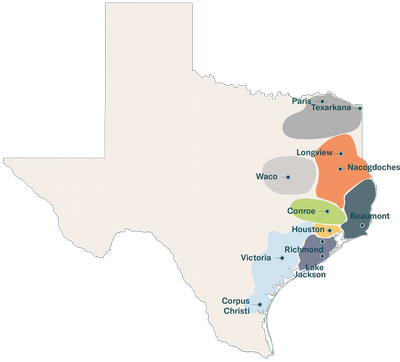
The Medical Artificial Intelligence Institute benefits from SHSU-COM’s expanding clinical education and graduate medical education network across Texas.
Through partnerships in rural communities, growing suburban regions, and hospital systems across the state, the Institute is uniquely positioned to study how AI tools perform in real healthcare environments—not just laboratories.
This footprint creates opportunities for collaborative pilots, physician training, population health initiatives, and responsible implementation strategies that improve access to care where it is needed most.
Faculty Expertise
-
Dr. Vinoth Sittaramane
Dr. Sittaramane’s expertise and research interests focus on the implementation of AI-driven clinical workflows and the strategic integration of AI-based clinical data analytics to improve efficiency, decision-making, and patient outcomes.
-
Dr. Xuewei Chen
Dr. Chen’s expertise centers on leveraging medical AI to improve health literacy, combat misinformation, and expand equitable healthcare access for underserved communities.
-
Dr. Simon Koch
Dr. Koch’s research integrates medical simulation, AI-driven image analysis, and machine learning to develop high-fidelity surgical training and intelligent diagnostic systems that advance clinical decision-making, medical education, and patient outcomes.
-
Dr. Ravi Yarid
Dr. Yarid focuses on the clinical and policy implementation of AI in healthcare, with expertise in AI-enabled clinical workflows, digital health governance, and ethical integration of emerging technologies into osteopathic and primary care practice.
-
Dr. Rayleigh Chiang
Dr. Chiang specializes in clinically validated AI for sleep and chronic disease care, with expertise in digital health systems, remote diagnostics, and policy-aligned integration of medical AI into value-based and patient-centered healthcare models.
-
Dr. Glenda Read
Dr. Read focuses on the clinical evaluation and governance of AI-based documentation systems in primary and osteopathic care, with emphasis on patient safety, workflow integrity, and evidence-based implementation in real-world clinical settings.
-
Dr. Victor Hsiao
Dr. Hsiao studies the impact of AI-enabled clinical documentation and decision support on primary care delivery, patient safety, and health system performance, bridging frontline clinical practice with policy-informed adoption and oversight.
We Collaborate With:
- Hospitals and Health Systems
- Biotech Companies
- Pharmaceutical Organizations
- Technology Firms
- Government Agencies
- Community Physicians
Partnership Opportunities:
- Multi-site Clinical Pilots
- Research Collaboration
- Population Health Analytics
- Data Validation Projects
- Physician Workforce Training
- Rural Health AI Deployment
- Advisory Roles
- And More
Frequently Asked Questions
Tomorrow’s physicians must understand how to safely use emerging technologies in patient care.
No. The Institute supports education, clinical care, and partnerships in addition to research.
AI can help address physician shortages, rural access challenges, and growing healthcare demand.
Industry and healthcare organizations can collaborate through pilots, sponsorships, research, and workforce development.
Current Collaborators
Some of our current collaborators include:
-
SleepWell Corp
-
The Robotic Global Surgical Society
-
HCA Houston Healthcare Northwest
-
UT Health
-
Rice University
-
Houston Methodist
Connect With the Institute
Dr. Vinoth Sittaramane
Director, Medical Artificial Intelligence Institute