Physician Assistant Studies
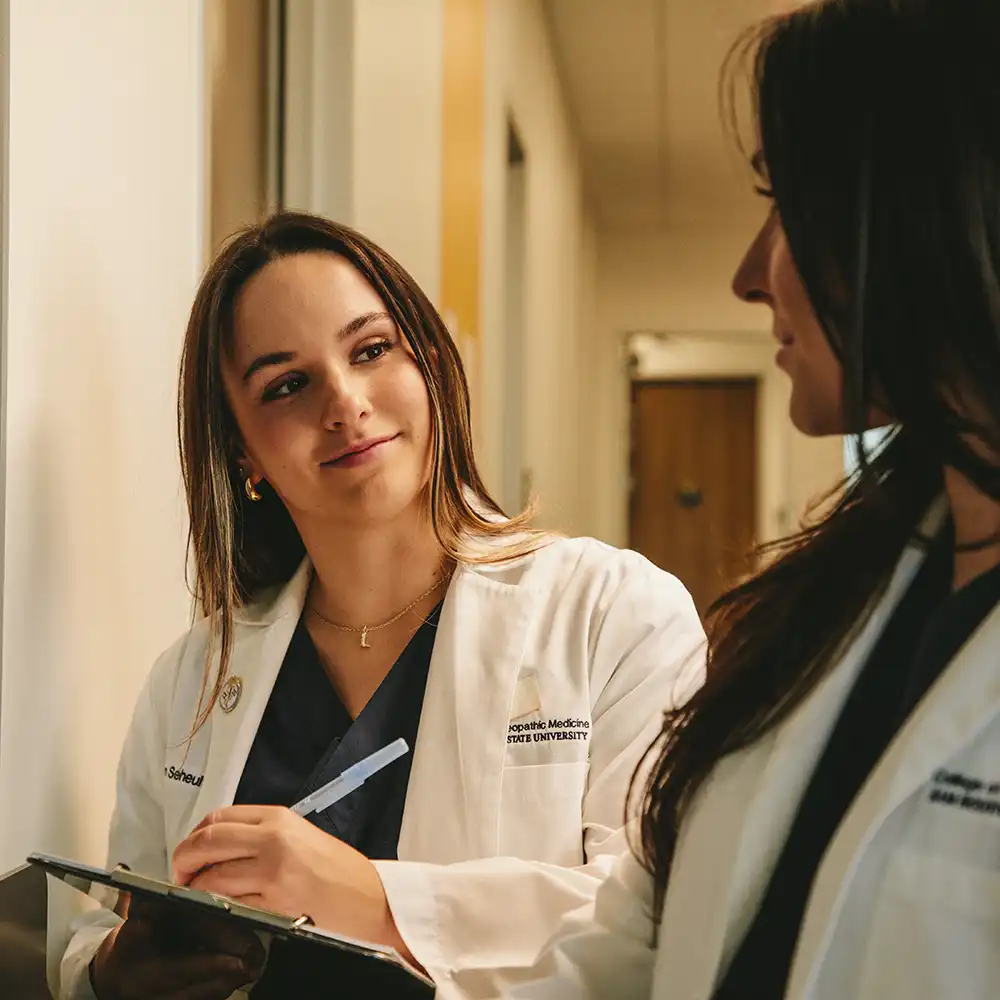
The Master of Physician Assistant Studies at SHSU prepares future PAs for excellence through a collaborative, patient-centered curriculum.
- Master of Physician Assistant Studies
- Conroe
- Face to Face
102 Credit Hours
Prepare to Lead in Patient-Centered Care
Sam Houston State University’s Master of Physician Assistant Studies (MPAS) program offers a 28-month journey combining rigorous coursework and hands-on clinical training. Students build strong foundations in medical science and patient care through pre-clinical study and diverse clinical rotations in Surgery, Emergency Medicine, Family Medicine, Pediatrics, and more. Throughout the program, you’ll gain real-world experience, conduct a research project, and prepare for the Physician Assistant National Certifying Exam (PANCE). SHSU’s MPAS program equips future healthcare professionals to serve with knowledge, skill, and compassion—ready to make an impact in communities across Texas and beyond.
Program Details
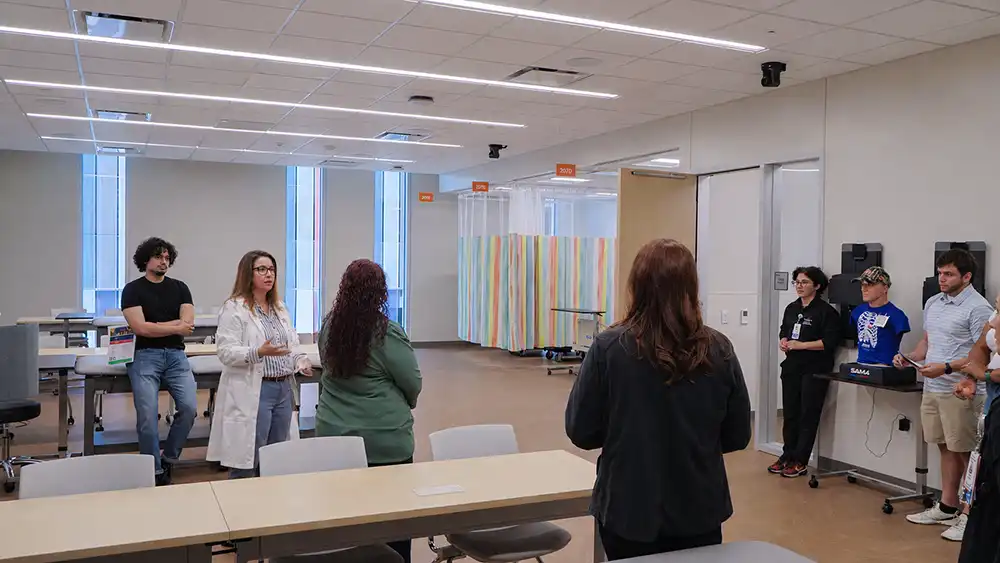
The Sam Houston State University Master of Physician Assistant Studies Program is dedicated to fostering and sustaining an academically rigorous environment supported by exceptional faculty, staff, and students. The program actively seeks candidates with strong potential for clinical excellence and whose professional aspirations align with the mission, vision, and core values.
Through a holistic admissions process, the program thoughtfully assesses each applicant's academic readiness, personal qualities, and life experiences, valuing the unique strengths they contribute and their ability to grow into skilled, empathetic healthcare providers.
-
Accreditation
The ARC-PA has granted Accreditation-Provisional status to the Sam Houston State University Master of Physician Assistant Studies Program sponsored by Sam Houston State University. Accreditation-Provisional is an accreditation status granted when the plans and resource allocation, if fully implemented as planned, of a proposed program that has not yet enrolled students appear to demonstrate the program’s ability to meet the ARC-PA Standards or when a program holding Accreditation[1]Provisional status appears to demonstrate continued progress in complyingwith the Standards as it prepares for the graduation of the first class (cohort) of Students. Accreditation-Provisional does not ensure any subsequent accreditation status. It is limited to no more than five years from matriculation of the first class. We will take our first cohort in August 2026. 40 students per cohort.
The program’s accreditation history can be viewed on the ARC-PA website below.
-
Mission
The mission of the Master of Physician Assistant Studies program at Sam Houston State University promotes a team based, student-centered curriculum that will encourage personal growth, life-long learning and community engagement with an emphasis on rural and urban populations preparing physician assistants to provide competent care to patients, families, and communities through Texas and beyond. -
Vision
The Sam Houston State University Master of Physician Assistant Studies Program (MPAS will be recognized nationally for its leadership in patient-centered care. Through the developmentof professionalism, adaptability, and problem-solving skills, graduates will become 8 compassionate healthcare leaders committed to improving access to care and addressing workforce needs in East Texas and beyond.
Information Sessions
Join an information session to learn how to prepare, stand out as an applicant, and position yourself for success.
Get an inside look at our program, including curriculum, clinical experiences, and what to expect as a future MPAS student. We’ll also cover prerequisite planning, application timelines, and next steps to help you stay on track
Virtual Information Session
SEPTEMBER 11 @ 1 PM JOIN HERE
Meeting ID: 820 5092 7036 Passcode: 075103Our information sessions are updated regularly, so we encourage you to check back often for new dates. Don’t see one that works for you? Reach out to to us at pad@shsu.edu.—
Admissions Process
How to Apply
All applicants must submit a formal application and supporting documents through CASPA.
The application open annually in April. Due to the provisional accreditation timeline, all applications must be verified by September 1, 2026.
About CASPA
CASPA (Centralized Application Service for Physician Assistants) is a service of the Physician Assistant Education Association (PAEA), the only national organization representing PA educational programs since 2001. CASPA simplifies the PA school application process by allowing you to apply to multiple programs with one application.
Secondary Application Fee
|
|
Important: A secondary application fee of $55.00 is required. The admissions team will send a link to the applicant’s email with payment instructions. |
Payment must be completed through the payment portal after submitting the CASPA Application. Applicants should retain a copy of the payment receipt for their records should the program be unable to confirm payment at the time of verification.
The SHSU MPAS Program will not refund Secondary Application fees due to CASPA-related issues (e.g., non-verification, late-verification, and non-completion), or any expenses incurred during the application and/or interview process, regardless of accreditation status.
The SHSU MPAS Program embraces a comprehensive admissions approach that thoughtfully evaluates each applicant's life experiences, professional attributes, and academic accomplishments. Admission is highly competitive. Meeting some or all requirements does not guarantee admission. Applicants must satisfy both the minimum and prerequisite coursework requirements. Prerequisites must be completed prior to August 1st.
Application Submission
Applicants must submit a formal application and all supporting documents to CASPA.
Quantitative Applicant Review
All applications undergo a structured initial review to ensure completeness and confirm all required materials have been received. The admissions team evaluates whether applicants meet minimum requirements, including prerequisite coursework and GPA. Each application is then assessed holistically using a predefined screening rubric.
Qualitative Faculty Review
Screened applications are reviewed by program faculty, who evaluate all narrative components and score them using a predefined rubric. The qualitative score from this review is combined with the applicant's previous screening score to determine their overall ranking and eligibility for an interview recommendation.
Admission Chair Review
The Admissions Committee Chair then compiles a ranked list of applicants to receive interview invitations. Candidates selected for an interview will receive an email invitation with an interview date and RSVP information. RSVPs must be received by the posted deadline.
Candidates selected for an interview will be invited to the new Health Professions Building for an in-person experience combining a format of Multiple Mini Interview (MMI) and traditional individual interview formats. During this process, invited candidates will meet with members of the Admissions Committee who will assess a range of professional attributes essential to success in the PA profession:
- Emotional and academic maturity
- Empathy and compassion
- Motivation for the profession
- Effective communication skills
- Critical thinking ability
- Knowledge of the PA role within the healthcare system
- Clear understanding of the program's mission and goals
- Potential for lasting career fulfillment as a practicing physician assistant
Interviews will be conducted in person from March through May 2026. Each portion of the interview will be scored individually by trained personnel using a predefined rubric.
Pre-interview quantitative and qualitative scores are combined with interview day scores for a cumulative applicant score. The Admissions Chair meets with the admission committee to determine final applicant selections.
The Chair/Program Director has final approval of all recommended candidates and any admissions process changes.
Admits
Applicants will be notified of admission decisions once ARC-PA has made its determination of provisional status.
Official Notification
While applicants will be kept informed of their progress during the admissions process, official notification of acceptance will be withheld until the ARC-PA issues its determination of provisional accreditation.
Accepting an Offer
If you receive an offer of admission, you must complete the offer attestation process by the deadline indicated in your admission letter. Failure to respond will result in forfeiture of the admissions offer. Deferrals of admission will not be granted for any reason. Candidates who receive an offer and decline due to deferral may reapply in future cycles without priority consideration.
ADMISSION REQUIREMENTS
Minimum Requirements
- CASPA application with official transcripts submitted by September 1 deadline at 11:59 PM ET
- Secondary Application Fee submitted once the application is verified
- Evidence of U.S. Citizenship, permanent U.S. residence, or current DACA recipient and/or undocumented status
- International applicants must comply with all Sam Houston State University requirements for international graduate students
- Bachelor's degree (or higher) from a regionally accredited U.S. institution or equivalent, prior to matriculation
- Completed prerequisite coursework by August 1st
- Each prerequisite course must be completed with a grade of 2.0 or higher (4.0 scale)
- Minimum cumulative GPA of ≥3.0
- Minimum cumulative science GPA of ≥3.0
- Three letters of recommendation by September 1 deadline at 11:59 PM ET
|
|
No Entrance Exams Required. GRE, PA-CAT, MCAT, CASPER and similar exams are not required. If scores are reported in CASPA, they will not be considered during the review process. |
Prerequisite Coursework
- Completed with a letter or numerical grade August 1st
- Grades of Pass (P) for 2020–2021 coursework will be accepted
- No grades of pass or credit will be accepted for science courses
- Minimum 15 SCH must be completed within the last 10 years
- Science courses must be intended for science majors
- International degrees must be evaluated by WES or equivalent by Sam Houston State University
- AP/IB/CLEP and concurrent enrollment coursework documented on official transcript accepted
- Community college and online/distance courses from regionally accredited institutions accepted
|
Course |
SCH |
|
Biology I * |
3 |
|
Biology II * |
3 |
|
Chemistry I |
3 |
|
Chemistry II |
3 |
|
Biochemistry or Organic Chemistry |
3 |
|
Anatomy & Physiology I (Human Preferred) * |
4 |
|
Anatomy & Physiology II (Human Preferred) * |
4 |
|
Microbiology |
3 |
|
Genetics |
3 |
|
Statistics |
3 |
|
Psychology (Normal or Abnormal) |
3 |
* Biology I & II may be replaced with advanced biology coursework, subject to program approval. A combined Human A&P series with lab (two semesters / 8 semester credit hours) can fulfill the A&P I and II prerequisites.
In addition to academic and professional achievements, the following factors are considered during the review of all applications:
- Highest degree attained (beyond bachelor's degree)
- Course success, completion, and academic rigor, including overall GPA, science GPA, last 60 hours GPA, and prerequisite GPA
- Healthcare professional licensure or certification
- Effective communication, professionalism, and emotional intelligence
- A clear and compelling motivation to become a physician assistant
- Resilient self-reflection and a growth mindset
- Health-related and/or direct patient care experience
- Academic strengths in science and healthcare related coursework
- Leadership service experience
- Community engagement, particularly in underserved areas
- Economically or educationally disadvantaged background and/or regional history of East Texas residency
- Military service or veteran status
- First Generation College Student status
- Letters of reference and personal statement
The MPAS Program requires that all students be able to meet the program's Technical Standards for admission, progression, and graduation. These standards outline the physical, cognitive, and behavioral abilities necessary to complete the program and enter PA practice.
Policies
The purpose of the Master of Physician Assistant Studies Program at Sam Houston State University is to develop skilled, compassionate healthcare professionals who are equipped with the clinical expertise, interpersonal skills, and cultural competencies necessary to provide high-quality, patient-centered care in diverse medical settings.
Tuition & Fees
The Estimated Cost of Attendance breaks down anticipated program expenses based on the rate of tuition and estimated fees that will be applied for the entire 28-month curriculum.
Additional Expenses
Learners are responsible for expenses associated with:
- Laptop/computer (required — Windows or MacOS; Chromebooks not compatible with testing software)
- Medical equipment kit (estimated $1,000–$1,500)
- Housing and living expenses
- Transportation and parking
- Health insurance
- Professional expenses related to the National Certifying Examination for Physician Assistants (PANCE)
Refunds
For information regarding cancellation of registration, withdrawal from a program, and fee refunds, please refer to SHSU's Refund Policy
|
|
Important Notice: Charges are subject to change without advance notice. Tuition and fees have been set regardless of the method of instruction and will not be refunded in the event instruction occurs remotely. Figures represent currently approved or proposed amounts and may not be final. Any changes will be disseminated on the program website and in writing to enrolled learners as soon as the change occurs. |
Sam Houston State University (SHSU) offers various on-campus housing options for graduate students, including apartments and houses. Additionally, some on-campus housing is specifically designated for upperclassmen and families.
Learners granted admission must fulfill all program requirements. No substitutions for program of study coursework will be accepted, including but not limited to:
- International Baccalaureate (IB) courses
- CLEP (College-Level Examination Program) examination
- Credit for experiential learning and continuing education
- Courses completed as part of a professional degree
- Medical school course completion (domestic or foreign)
- Advanced Placement
The MPAS Program does not admit students from other physician assistant programs. All currently or formerly enrolled PA students at other PA programs must participate in a competitive admissions process along with all other applicants.
Criminal record background checks (CBC) and drug screens are a standard part of the physician assistant profession. Successful completion of a CBC is required for admission to and continuation in the Program.
Many affiliated hospitals require CBCs and drug screens on all employees and anyone interacting with patients; therefore, these are mandatory and must be updated annually. An additional background check and/or drug test may be required prior to beginning the clinical phase of the program. Inability to obtain a successful background check may negatively impact progress in the program. Applicants should be aware that a prior criminal background could restrict the ability to obtain professional state licensure. Acceptance into the MPAS program does not imply or guarantee that a student will be able to obtain such licensure.
Students granted an approved non-academic leave of absence may be decelerated to the next cohort based on the duration of their leave. The MPAS Program does not permit deceleration for reasons related to professionalism.
All students must progress at the established pace of their original cohort. Once matriculated, students are not permitted to drop individual courses; doing so will result in dismissal from the MPAS Program. Upon returning from a non-academic leave, students may be required to fulfill criteria outlined in the Proficiencies Required for Consideration of Reinstatement policy.
The MPAS Program curriculum is designed as an intensive, full-time program requiring significant commitment of time and effort. Students should expect a rigorous course load that includes extensive classroom instruction and clinical experiences. Special seminars, guest lectures, and community service-learning projects may be scheduled with limited advance notice.
Given the demanding nature of the program, students are strongly encouraged to secure external financial support through scholarships, loans, grants, or other funding sources. Employment while enrolled is strongly discouraged.
PA students are neither permitted nor required to perform any work for the MPAS Program. Students may not function as instructional faculty or be used as substitutes for regular staff. During clinical experiences and rotations, students are strictly prohibited from replacing clerical or clinical personnel.
Supervised Clinical Practice Experience (SCPE) Students are not responsible for securing or arranging their own clinical rotation sites or preceptors. All clinical placements are coordinated by the program.
All students admitted to the MPAS Program must provide documentation of current immunization status and meet all health clearance requirements prior to matriculation and continuously throughout enrollment in the program. These requirements are mandated to ensure compliance with state regulations, clinical affiliate policies, and to protect the health and safety of patients, students, faculty, and staff.
Students are required to submit verifiable documentation of the following immunizations and screenings:
- Measles, Mumps, Rubella (MMR): Two (2) doses or serologic evidence of immunity
- Varicella (Chickenpox): Two (2) doses or positive titer confirming immunity
- Hepatitis B: Complete vaccination series and positive surface antibody titer
- Tetanus, Diphtheria, Pertussis (Tdap): One (1) dose within the past 10 years
- Influenza: Annual vaccination
- COVID-19: Vaccination in accordance with current clinical site requirements (if applicable)
- Tuberculosis Screening: Annual negative TB test (IGRA or PPD) or negative chest radiograph if indicated
Additional requirements may include, but are not limited to:
- Physical examination and health clearance by a licensed healthcare provider
- Proof of health insurance coverage
- Compliance with drug screening and background check requirements as required by clinical affiliates
Students are responsible for maintaining up-to-date immunization records and must provide updated documentation upon request. Failure to meet or maintain these requirements may result in delay or denial of participation in clinical experiences, which may impact progression in the program.
The program does not guarantee placement at clinical sites that grant exemptions (medical, religious, or personal belief). Students who are unable to meet immunization requirements may be unable to complete program requirements and, therefore, may be subject to dismissal from the program.
LEARNING OUTCOMES & COMPETENCIES
The program's learning outcomes and graduate competencies define the medical knowledge, interpersonal skills, clinical and technical skills, professional behaviors, and clinical reasoning abilities that students must demonstrate to successfully complete the SHSU MPAS Program. This competency framework draws from multiple foundational resources, including the program's Mission, the Competencies for the Physician Assistant Profession (AAPA et al., 2021), Core Competencies for the Physician Assistant Graduate (PAEA et al., 2018), and Competencies for the PA Profession (ARC-PA et al., 2021).
|
1 |
Graduates will elicit a comprehensive medical history and perform a focused and/or comprehensive physical examination based on the patient's chief complaint. Medical Knowledge | Clinical & Technical Skills | Clinical Reasoning & Problem-Solving |
|
2 |
Graduates will be able to formulate a differential diagnosis for medical and behavioral conditions commonly encountered in primary care using foundational knowledge from the basic and clinical sciences. Medical Knowledge | Clinical Reasoning & Problem-Solving |
|
3 |
Graduates will apply critical thinking principles to formulate a treatment management plan for preventive, acute, and chronic conditions by integrating current medical literature and evidence-based medicine. Medical Knowledge | Clinical Reasoning & Problem-Solving | Practice-Based Learning |
|
4 |
Graduates will select, order, and interpret appropriate diagnostic studies and recommend effective treatment. Clinical & Technical Skills | Clinical & Problem-Solving Abilities |
|
5 |
Graduates will communicate respectfully with patients, families, and caregivers considering the patient's emotional state, cultural background, and socio-economic factors to facilitate shared medical decision making. Interpersonal Skills | Professional Behaviors | Society & Population Health |
|
6 |
Graduates will demonstrate effective and respectful communication with healthcare providers and interdisciplinary team members to promote collaboration and patient centered care. Interpersonal Skills | Professional Behaviors |
|
7 |
Graduates will educate patients on health conditions, treatment options, health promotion, disease prevention, and lifestyle risk factors. Medical Knowledge | Interpersonal Skills | Society & Population Health |
|
8 |
Graduates will critically evaluate their clinical performance and incorporate feedback and apply evidence-based practices through self-directed learning to continuously improve patient care. Practice Based Learning | Medical Knowledge | Interpersonal and Communication | Patient Care |
Medical Knowledge
- (MK1) Integrate foundational biomedical, clinical, and behavioral sciences in diagnosing and managing health conditions.
- (MK2) Apply critical thinking and clinical reasoning to make informed decisions across diverse clinical scenarios.
- (MK3) Utilize current evidence and clinical guidelines to inform diagnostic and therapeutic decision-making.
- (MK4) Recognize limits of knowledge and seek consultation or additional resources when appropriate.
Interpersonal Skills
- (IPS1) Establish rapport, demonstrate active listening, and communicate clearly with patients and families.
- (IPS2) Tailor communication to patient literacy, language, and cultural context.
- (IPS3) Use verbal, non-verbal, and written communication effectively within clinical documentation and team interactions.
- (IPS4) Demonstrate conflict resolution and shared decision-making skills in clinical encounters.
- (IPS5) Elicit an accurate and pertinent medical history.
- (IPS6) Deliver patient-centered education to patients regarding their medical care.
- (IPS7) Demonstrate understanding of PA roles and responsibilities within interprofessional teams
Clinical & Technical Skills
- (CTS1) Perform a detailed physical exam relevant to the medical history.
- (CTS2) Perform procedural and clinical skills considered essential for entry into PA practice.
- (CTS3) Counsel and educate patients and families from diverse backgrounds to empower them to participate in their care and enable shared decision-making.
- (CTS4) Demonstrate the ability to accurately document patient encounters in the medical record.
Professional Behaviors
- (PB1) Uphold ethical principles, professional behaviors, and legal standards in all aspects of practice.
- (PB2) Adhere to the principles of honesty, integrity, and accountability.
- (PB3) Recognize and manage conflicts of interest and ethical dilemmas.
- (PB4) Maintain patient confidentiality and comply with legal and regulatory requirements.
- (PB6) Respect patient, family, and caregivers by considering the emotional state, cultural background, and socioeconomic factors.
Clinical Reasoning & Problem-Solving Abilities
- (CRPS1) Select and analyze appropriate diagnostic studies to support patient assessment and clinical decision making.
- (CRPS2) Develop a differential diagnosis using information gathered from the patient's history, physical examination, and diagnostic test results.
- (CRPS3) Design an individual treatment plan that incorporates pharmacologic and pharmacotherapeutic interventions.
- (CRPS4) Assess, evaluate, and apply medical information to address clinical questions and incorporate healthcare knowledge into clinical practice.
Society & Population Health
- (SPH1) Recognize and address the broader determinants of health and their impact on patients and communities.
- (SPH2) Assess social, economic, and environmental factors influencing health outcomes.
- (SPH3) Promote prevention, wellness, and health education within the community.
- (SPH4) Identify and address health disparities through advocacy and policy awareness.
- (SPH5) Collaborate with public health and community resources to improve population health.
Practice-Based Learning
- (PBL1) Utilize self-reflection and self-critique to identify strengths, and deficits in knowledge skills, attitudes, and behaviors.
- (PBL2) Engage in learning activities aimed at remediating gaps in personal knowledge, skills, attitudes, and behaviors.
- (PBL3) Comply with safety protocols to prevent medical errors.
- (PBL4) Access and interpret reliable medical information to answer clinical questions and integrate new healthcare knowledge into practice.
|
DIDACTIC COURSES (64 SCH) |
|
|
Year 1, Fall (14 SCH) |
|
|
PHAS 5101: Studies in the PA Profession |
1 |
|
PHAS 5112: Clinical Lab Methods |
1 |
|
PHAS 5102: Intro Pharmacology & PharmTX |
1 |
|
PHAS 5105: Health Policy & Management |
1 |
|
PHAS 5103: Legal & Ethical Issues |
1 |
|
PHAS 5232: Behav, Social, & Mental Health |
2 |
|
PHAS 5201: Patient Encounter I* |
2 |
|
PHAS 5202: Bio Science and Genetics |
2 |
|
PHAS 5203: Preventative & Community Health |
2 |
|
PHAS 5104: Research & Statistical Methods |
1 |
|
Year 1, Spring (19 SCH) |
|
|
PHAS 5111: Clinical Reasoning I |
1 |
|
PHAS 5311: Med Physio and Patho I |
3 |
|
PHAS 5313: Pharmacology & PharmTX I |
3 |
|
PHAS 6510: Anatomy* |
5 |
|
PHAS 5411: Clinical Medicine I |
4 |
|
PHAS 5312 Patient Encounter II |
3 |
|
Year 1, Summer (15 SCH) |
|
|
PHAS 5421: Clinical Medicine II |
4 |
|
PHAS 5321: Med Physio and Patho II |
3 |
|
PHAS 5322: Pharmacology & PharmTX II |
3 |
|
PHAS 5221: Clinical Clerkship* |
2 |
|
PHAS 5121: Clinical Reasoning II |
1 |
|
PHAS 5113 ECG Seminar |
1 |
|
PHAS5106 Clinical Radiology |
1 |
|
Year 2, Fall (16 SCH) |
|
|
PHAS 5431: Clinical Medicine III |
4 |
|
PHAS 5331: Med Physio & Patho III |
3 |
|
PHAS 5333: Pharmacology & PharmTX III |
3 |
|
PHAS 5332: Patient Encounter III* |
3 |
|
PHAS 5131: Clinical Reasoning III |
1 |
|
PHAS 5233: Clinical Preparation |
2 |
|
|
|
|
CLINICAL COURSES (38 SCH) - See Clinical Rotation Course Numbers Below |
|
|
Year 2, Spring (13 SCH) |
|
|
PHAS 6141: Capstone I |
1 |
|
PHAS 64XX: Clinical Rotation I |
4 |
|
PHAS 64XX: Clinical Rotation II |
4 |
|
PHAS 64XX: Clinical Rotation III |
4 |
|
Year 2, Summer I (5 SCH) |
|
|
PHAS 64XX: Clinical Rotation IV |
4 |
|
PHAS 6142: Capstone II |
1 |
|
Year 2, Summer II (5 SCH) |
|
|
PHAS 64XX: Clinical Rotation V |
4 |
|
PHAS 6151: Capstone III |
1 |
|
Year 2, Fall (15 SCH) |
|
|
PHAS 6301: PANCE Prep |
3 |
|
PHAS 64XX: Clinical Rotation VI |
4 |
|
PHAS 64XX: Clinical Rotation VII |
4 |
|
PHAS 64XX: Clinical Rotation VIII |
4 |
|
*Course with Laboratory Component |
|
|
Didactic Curriculum: 4 semesters (16 months) |
64 |
|
Clinical Curriculum: 3 semesters (12 months) |
38 |
|
Program Total Duraction (28 months) |
102 |
|
|
|
|
|
|
|
Clinical Rotation Course Numbers |
|
|
PHAS 6410 Family Medicine Rotation |
|
|
PHAS 6411 Internal Medicine Rotation |
|
|
PHAS 6412 Emergency Medicine Rotation |
|
|
PHAS 6413 Surgery Rotation |
|
|
PHAS 6414 Women's Health Rotation |
|
|
PHAS 6415 Pediatric Medicine Rotation |
|
|
PHAS 6416 Mental & Behavioral Rotation |
|
|
PHAS 6417 Clinical Elective Rotation |
|
FREQUENTLY ASKED QUESTIONS
How difficult is the first year of PA school at SHSU?
PA education is rigorous. Although the program makes every effort to make the experience rewarding, the overwhelming nature of large amounts of course content, curriculum, assessments, examinations, and commitments renders the experience most likely more demanding than previously attempted experiences in higher education. Potential students should review the curriculum carefully to make informed decisions about career planning and work/life balance.
How many hours per week are required for on-campus coursework?
Classroom contact hours vary from course to course and week to week. However, students should expect to be occupied with on-campus curriculum a minimum of 40+ hours per week. PA students often spend 4–8 hours studying outside the classroom per day.
How many exams per week are given?
The number of exams and assessments varies by course and type. PA students are expected to be flexible and ready to take an exam with short notice. There are weeks — finals week and others — with three or more scheduled exams/assessments.
Does the program offer online courses?
Program faculty utilize hybrid teaching modalities requiring students to learn in online platforms. All courses include some element of online instruction to varying degrees. PA students are expected to be flexible and open to non-traditional and innovative methods of curriculum delivery.
What technology is required for matriculation?
Every PA student must possess a working, reliable laptop computer capable of connecting to the internet. Windows or MacOS are required. Chromebooks are not compatible with required testing software. SHSU provides the Microsoft Office 365 package to enrolled PA students free of charge. The program requires all written examinations to be taken on a laptop using program-provided software.
What medical equipment is required?
All PA students must purchase a medical equipment kit prior to matriculation, including a high-quality stethoscope, otoscope/ophthalmoscope, tuning forks, reflex hammer, and other items. Matriculating students will receive an order form with approved brands and specifications a few months prior to matriculation. The program has secured volume pricing. The estimated cost is $1,000–$1,500.
Does the program offer childcare services?
Childcare services are not available through the program.
Does the program offer tutoring?
Formal individualized and group tutoring may be provided as needed. The MPAS Program emphasizes Learner Success & Wellness and will work closely with students to determine learning styles, study habits, time management, exam performance, and certification exam preparation. The program employs various remediation and retention techniques based on course requirements and individual student needs.
What are clinical rotations and how many hours are required?
Clinical rotations are supervised clinical practice experiences completed under the supervision of a preceptor over a four-week period. While some rotations have a 40-hour work week, the time required could be higher. Students are also expected to do additional studying after hours to meet rotation and program expectations.
What disciplines are covered in clinical rotations?
The seven core clinical disciplines are covered in 4-week rotations: Family Medicine, Internal Medicine, Pediatrics, Women's Health, Mental and Behavioral Health, Surgery, and Emergency Medicine. There is one elective rotation. All rotation assignments are determined based on-site availability and quality.
Can clinical rotations be completed outside of Texas?
Not likely. Because of the program's mission, every student is required to complete most, if not all, clinical rotations in Texas. Requests for out-of-state rotations are approved for very limited reasons. Students may complete their elective clinical rotation in any location within the continental United States, including Alaska and Hawaii.
Where in Texas will clinical rotations be located?
Clinical rotations are available primarily in Harris, Walker, Montgomery, Polk, and Brazos counties in a variety of settings. The program will make all reasonable attempts to accommodate student preferences, though students may not always be assigned their choice of sites. Every student can expect at least one distant and rural clinical rotation.
Is housing available for distant clinical rotations?
Students are responsible for the cost of housing and transportation during the clinical phase. The program will maintain a list of affordable housing options outside of Montgomery County.
Does the program offer international clinical rotations?
The program does not currently offer any rotations located outside the United States.
What are the graduation requirements?
Every student must successfully complete the entire curriculum with a minimum 3.0 GPA, no more than 14 accumulated hours of C grades, no F grades, and be continuously enrolled. Students must also satisfactorily complete:
- An independent capstone project
- An End-of-Curriculum™ national multiple-choice comprehensive written examination
- A final summative standardized patient OSCE assessing medical knowledge, clinical and technical skills, interpersonal and communication skills, and professionalism
How does the program prepare students for the PANCE?
Completion of the full 28-month curriculum serves as the program's primary method of preparation. While successful PANCE performance is an important milestone, the program defines student success more broadly. Faculty are committed not only to preparing graduates for board certification but also to developing highly competent practitioners who will serve the community. Students engage in frequent assessments and benchmarks designed to strengthen clinical knowledge, practical skills, and critical thinking throughout the program.
Does the program place graduates in jobs?
The program does not participate in any job placement activities for alumni. However, program faculty are a good resource for any PA job search. The program also relies on TAPA to assist with the PA job search via position postings available to all members.
Faculty Invested in You
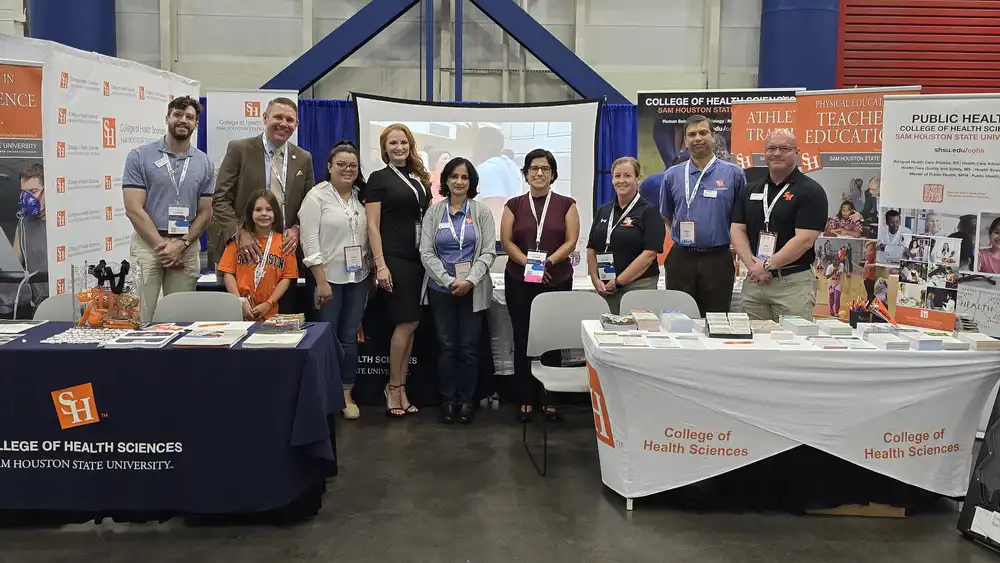
Sam Houston State University faculty bring a wealth of experience to the classroom. The professors who will guide you through your Master of Physician Assistant Studies are supportive, collaborative and dedicated to your success.
COHS in the News
Become a Bearkat
Ready to learn how SHSU can help you or to start your application today? Our team is here to help. Call 936-339-0148