Bringing the Classroom to the Community
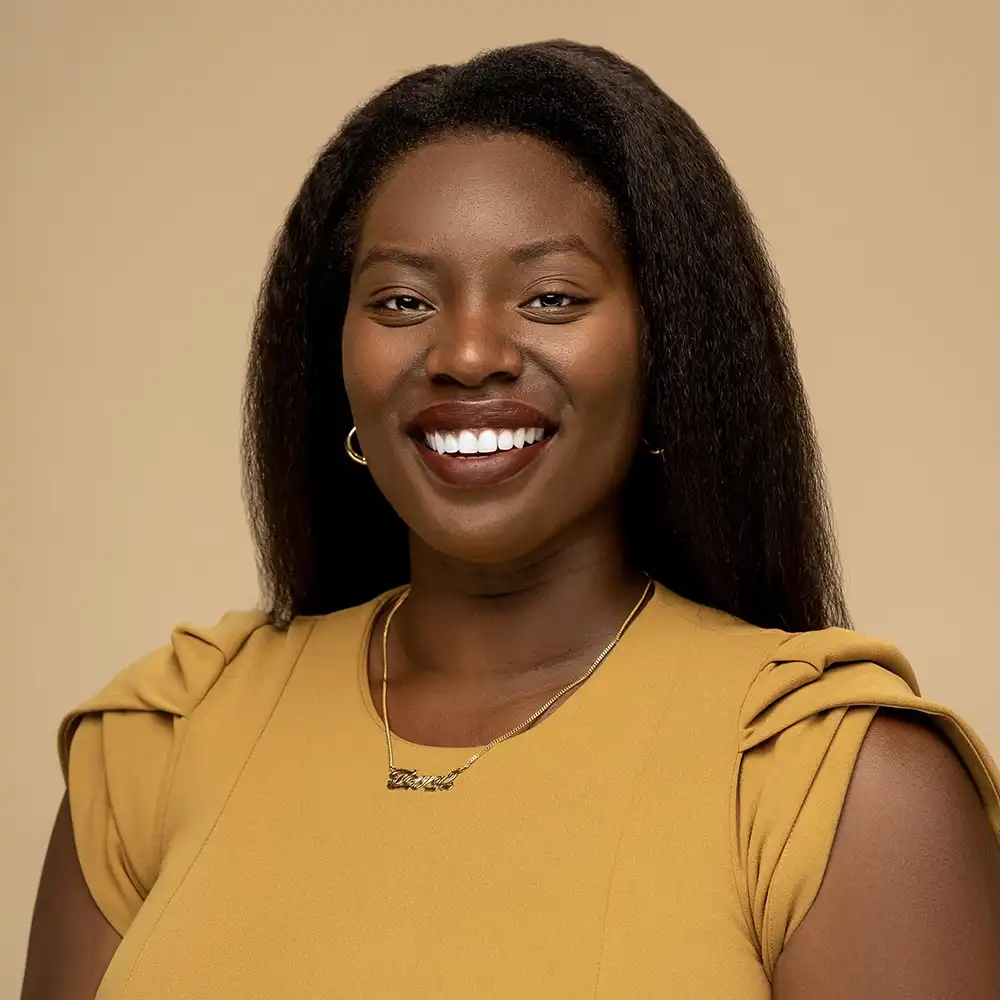
Education shouldn't be confined to the walls of a university. That belief is at the heart of In-House Scholar, a community-centered initiative created to make in-depth education more accessible beyond academia.
La-Toya Scott was inspired to create In-House Scholar to maintain the freedom and autonomy of being a scholar outside the confines of an academic institution. That independence allows her work as a public scholar to reach broader audiences and make education accessible on a deeper level. Her vision draws inspiration from Black feminist scholar Patricia Hill Collins, whose work emphasizes scholar activism beyond the college campus, as well as the community movement Lectures on Tap, founded by Ty and Felicia Freely.
A lifelong love of bookstores also shaped Scott's direction. "I love bookstores and always locate them in whatever city I'm living in," she shared. More than places to buy books, bookstores serve as gathering spaces where community members connect through conversation and ideas.
That made Kindred Stories a natural home for In-House Scholar's work. The Black women-owned literary hub regularly brings acclaimed authors into conversation with readers and has created a space where literature anchors meaningful dialogue. Students, professors, K–12 teachers, and community members of all ages and backgrounds come together in one collective space, united by a shared love of learning.
While there was no single writing workshop that transformed Scott's approach to writing, exceptional professors demonstrated what effective teaching should look like. Among the most influential was David Ikard, who became her mentor in writing craft. He spent hours reading drafts, offering feedback, and modeling revision through one-on-one conversations. Those lessons continue to shape both Scott's own writing—including a forthcoming book—and the workshops she now teaches. Years of studying literature also helped her develop an appreciation for the techniques and craft that make writing resonate with readers.
That commitment to craft is reflected in workshops exploring topics such as showing versus telling and the relationship between the body and writing. But beyond technique, the workshops are rooted in a larger philosophy: quality education should not be limited by institutional barriers.
"I always found it odd that there is an institutional barrier to getting access to certain education," Scott explained. "It's in part classist." Making Black literature and the lessons found within it available to the community—particularly during a time when many of these books are actively being challenged and banned—made bringing these workshops outside the university an easy decision.
The impact of that decision has become clear through the people who attend. One participant shared that they had always wanted to take a collegiate writing class but could never afford one. Others have asked about pursuing English degrees after attending the workshops, while current high school teachers have joined to gain new perspectives on teaching literature in their own classrooms.
Those moments reinforce a mission that extends beyond writing instruction. Scott hopes the workshops can become part of someone else's turning point, much like mentors once became part of hers.
As a first-generation child of immigrants, Scott did not grow up seeing Black professors in her community and never imagined academia as a possible career. Although she loved reading and words, she believes she would not have made the pivot into higher education without someone willing to invest in her. Before entering academia, she was working as a chef on Miami Beach when she approached Dr. Ikard—not as a college student, but as someone eager to learn.
"I have the opportunity to pay it forward," she said. "I am a testament to the fact that opportunities to educate and inspire don't necessarily begin with students already in a classroom in college."
Today, that spirit of paying it forward continues through In-House Scholar's partnership with spaces that celebrate Black culture and community. Hosting workshops alongside the historic Eldorado Ballroom and within the surrounding community is especially meaningful.
"It's dope!" Scott said. "That area has a lot of rich culture and people trying to do activist work. I'm happy to be a part of that."
Through In-House Scholar, the classroom extends beyond campus, proving that education, mentorship, and literary community can thrive wherever people gather to learn together.
We are excited to connect with you
contact us
Phone: 936.294.4608
Email: english@shsu.edu
Mailing Address:
Evans Complex
Box 2146
Huntsville, TX 77341
business hours
Monday - Friday
8:00 a.m. - 5:00 p.m.