SHSU Faculty Member Receives NIH Grant to Advance Rural Mobile Health Access
SHSU Faculty Member Receives NIH Grant to Advance Rural Mobile Health Access
The National Institutes of Health (NIH) has awarded Sam Houston State University a grant with $390,399 in anticipated support for research led by Xuewei Chen, PhD, to improve the deployment and use of mobile health clinics in rural communities.
Chen is an associate professor of public health in the Department of Biomedical & Digital Health Intelligence in Clinical Systems at the SHSU Russell & Glenda Gordy College of Osteopathic Medicine. Her project, “Transforming Rural Health: Strategies for Effective Mobile Health Clinic Deployment,” is supported by the National Institute on Minority Health and Health Disparities, part of the NIH.
The project builds on work Chen began while at Oklahoma State University. SHSU will lead the NIH-funded research in collaboration with colleagues at Oklahoma State.
Designed as a two-part study, the project will examine barriers that can limit awareness and use of mobile health clinics to develop a community-informed, data-driven tool that helps healthcare leaders determine where mobile services are needed most.
The research will focus on 10 counties in southwestern Oklahoma along the Texas border. Chen and the research team will survey and interview rural residents, healthcare providers and mobile health clinic staff to better understand factors affecting clinic awareness and utilization. The study will explore issues such as communication preferences, transportation challenges, trust, service gaps and coordination between local healthcare providers and mobile clinics.
Community members, healthcare providers, mobile clinic personnel and public health partners will also participate in workshops to help identify strategies for improving outreach, strengthening referral coordination and building confidence in mobile health services.
Those perspectives will inform the project’s second component: the development of an interactive mapping and planning tool. Using geographic information system technology, the tool will combine community input with information about travel times, population health needs, service capacity and operational considerations to evaluate potential mobile clinic locations and deployment strategies.
By bringing together community-driven research and geographic analysis, the project aims to produce a scalable framework that could help improve mobile health service delivery in other rural regions.
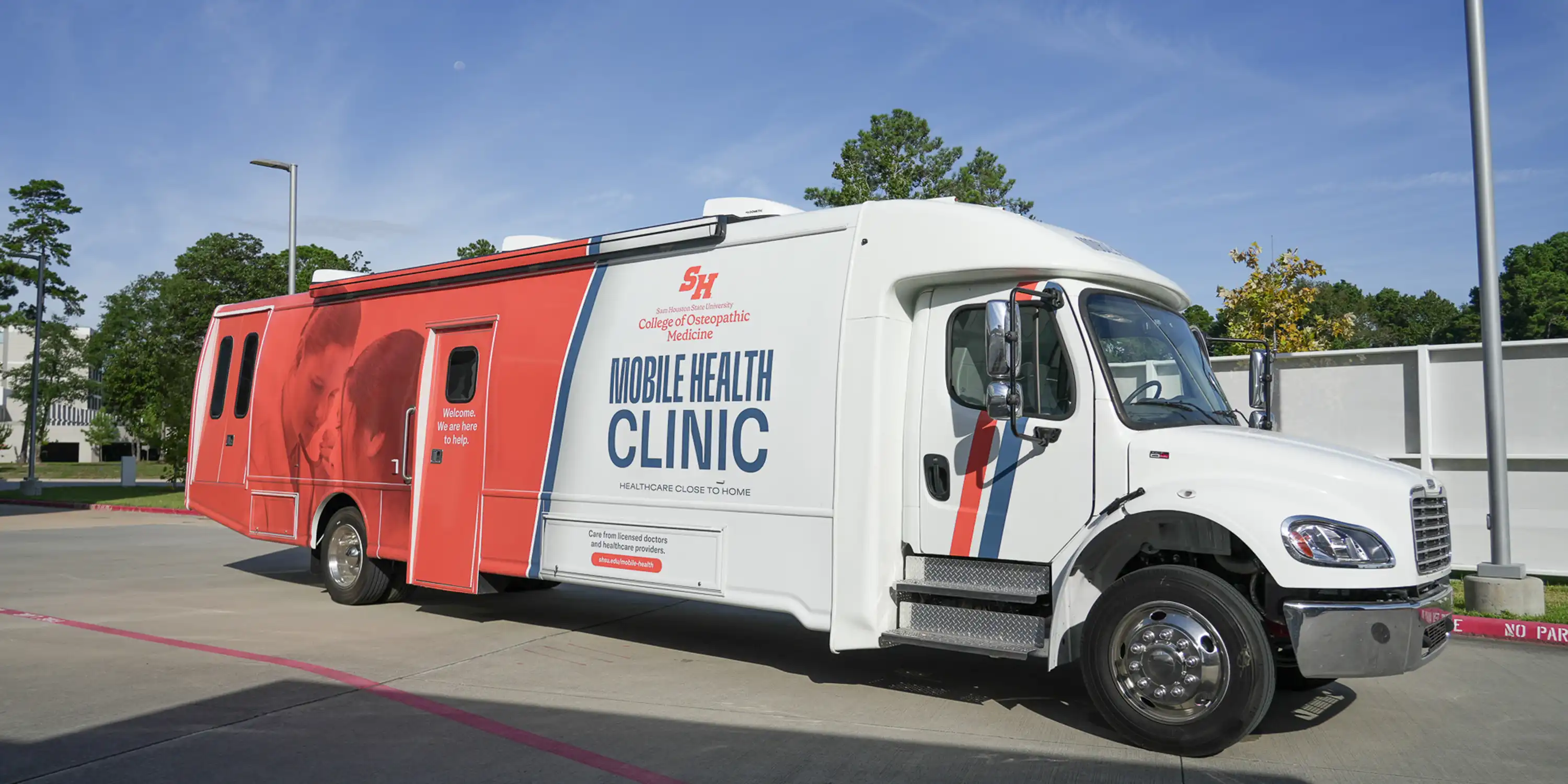
“I’m especially excited about this project because our college recently received funding to launch its own mobile health clinic,” Chen said. “This NIH grant presents a valuable opportunity to generate evidence and best practices that can help inform and strengthen our future work in support of the college’s rural health mission.”
Supported through a separate grant from the Texas Health and Human Services Commission, the college’s mobile health unit will focus on preventive women’s health services in rural Texas communities. Although Chen’s NIH-funded research will be conducted in Oklahoma, its findings could help inform future decisions about community outreach, service locations and the effective deployment of mobile healthcare resources in Texas.
This grant is one of multiple NIH awards received by the Gordy College of Osteopathic Medicine this year, reflecting continued growth in research focused on healthcare access and rural health.
Research reported in this announcement is supported by the National Institute on Minority Health and Health Disparities of the National Institutes of Health under Award Number R21MD021283. The content is solely the responsibility of the authors and does not necessarily represent the official views of the National Institutes of Health.
This page is maintained by COM Communications:
-
Director of Marketing, PR and Communications: Brittany Foreman