SHSU Russell & Glenda Gordy College of Osteopathic Medicine Awarded $1.4 Million to Expand Women’s Preventive Healthcare Access in East Texas
SHSU Russell & Glenda Gordy College of Osteopathic Medicine Awarded $1.4 Million to Expand Women’s Preventive Healthcare Access in East Texas
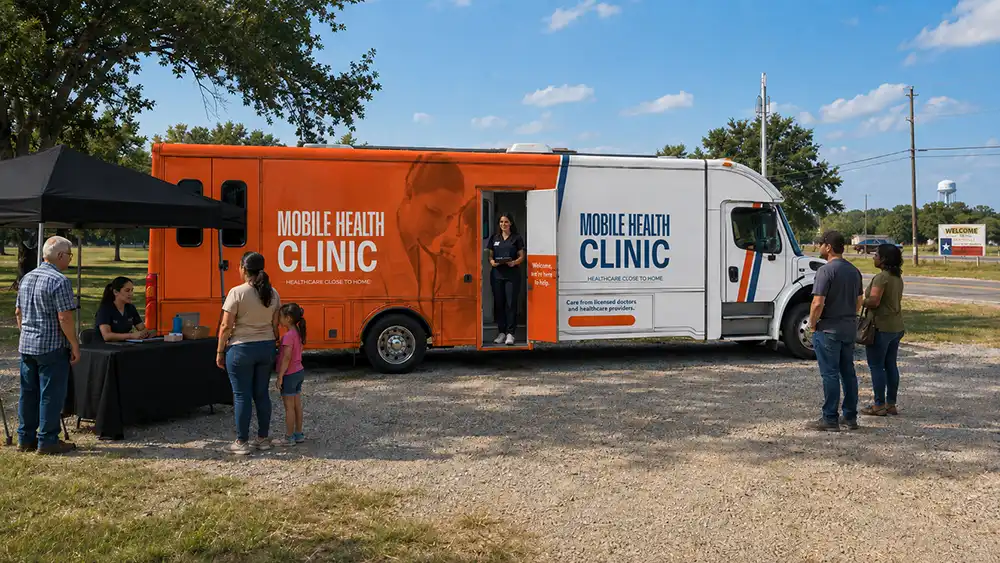
Sam Houston State University Russell & Glenda Gordy College of Osteopathic Medicine has been awarded $1.4 million from the Texas Health and Human Services Commission (HHSC) to establish a women’s preventive mobile health unit that will bring healthcare services directly to rural and medically underserved communities across East Texas.
The two-year award was provided through HHSC’s Mobile Health Unit Expansion Program. The unit is expected to serve communities within 100 miles of Conroe.
For many women in rural Texas, receiving preventive care involves much more than making an appointment. It may require traveling to another county, finding reliable transportation, arranging childcare and taking time away from work. When those obstacles become too difficult, routine screenings and health concerns may be postponed until a condition becomes more serious.
Across Texas, the numbers show how widespread this challenge is. More than 376,000 women of reproductive age live in a county with no women's health provider. Nearly half of all counties statewide fall into that category, and about one in five Texas women of childbearing age do not have insurance to cover care even if a provider is nearby. For many, that is not a statistic — it is the reason a routine screening turns into a 100-mile drive.
Gordy College of Osteopathic Medicine’s new mobile health unit is designed to help close that distance.
“This award gives us the opportunity to take meaningful action on one of the most persistent challenges facing rural communities: bringing preventive healthcare within reach,” said Thomas J. Mohr, DO, dean of Gordy College of Osteopathic Medicine and vice president for medical affairs at SHSU. “We are excited about what this will mean for the women and families we serve, as well as what it will mean for the education of future physicians.”
Planned services will include cervical cancer screenings; clinical breast exams and mammography referrals; reproductive, sexual and midlife health services; and preventive screenings for conditions such as high blood pressure and diabetes. Patients may also receive mental health screenings, immunizations and assistance addressing social and economic factors that affect their health.
The goal is not simply to provide a screening and move on. Staff will help eligible patients navigate programs such as Healthy Texas Women, Medicaid, the Family Planning Program and Breast and Cervical Cancer Services. Patients may also be connected with transportation assistance, additional testing, local healthcare professionals and other community resources.
Huntsville Memorial Hospital in Walker County and St. Luke's Health - Memorial Hospital - Livingston in Polk County provided letters of support for the initiative, reflecting the regional commitment behind the effort. Partnerships with local leaders, healthcare professionals and community members will also help the mobile unit reach the people who need it most, from identifying accessible locations to sharing information about available services.
That work is already beginning. Courtney West, PhD, senior associate dean of educational affairs and principal investigator for the grant, and Kathryn Potter, MD, chair of primary care and one of the doctors who will serve on the mobile unit, spoke at the Riverside City Council meeting on Aug. 4. The team will work with the city to identify an appropriate location for the unit, share information with residents and expand access to services across the community.
"We're looking forward to working with Riverside's leadership and the community to make sure this effort truly meets people where they are," West said.
The mobile clinic will include two private exam rooms, laboratory capabilities, diagnostic equipment, an accessible waiting area and a wheelchair lift. Satellite internet connectivity will support clinical operations in remote locations.
For Gordy College of Osteopathic Medicine student doctors, the mobile unit will offer a learning environment that extends beyond a traditional classroom or clinic. Students will work alongside faculty members, healthcare professionals and community partners while learning how preventive care, patient education and access to local resources work together.
“Student doctors will see how geography, access to resources and a patient’s everyday circumstances can influence health,” West said. “Learning in these communities will help prepare them to become thoughtful, resourceful physicians who understand the people they serve.”
They will also see the value of reaching patients earlier, whether a screening identifies a concern before symptoms appear, a routine test connects someone with treatment or enrollment assistance helps a patient establish ongoing care.
By bringing preventive services, health education and connections to resources directly into communities, the mobile unit will support healthier patients while preparing future doctors to address the realities of healthcare access in rural Texas.
This page is maintained by COM Communications:
-
Director of Marketing, PR and Communications: Brittany Foreman