Innovative Research at Sam Houston State University Leads to Two New Patents Advancing Agriculture and Forensic Science
Innovative Research at Sam Houston State University Leads to Two New Patents Advancing Agriculture and Forensic Science
Sam Houston State University continues to advance its reputation as a leader in applied research with two newly issued patents that merge cutting-edge technology, agricultural innovation and real-world problem solving. These achievements highlight the university’s commitment not only to scientific discovery, but also to developing tools that serve communities, industry partners and public agencies.
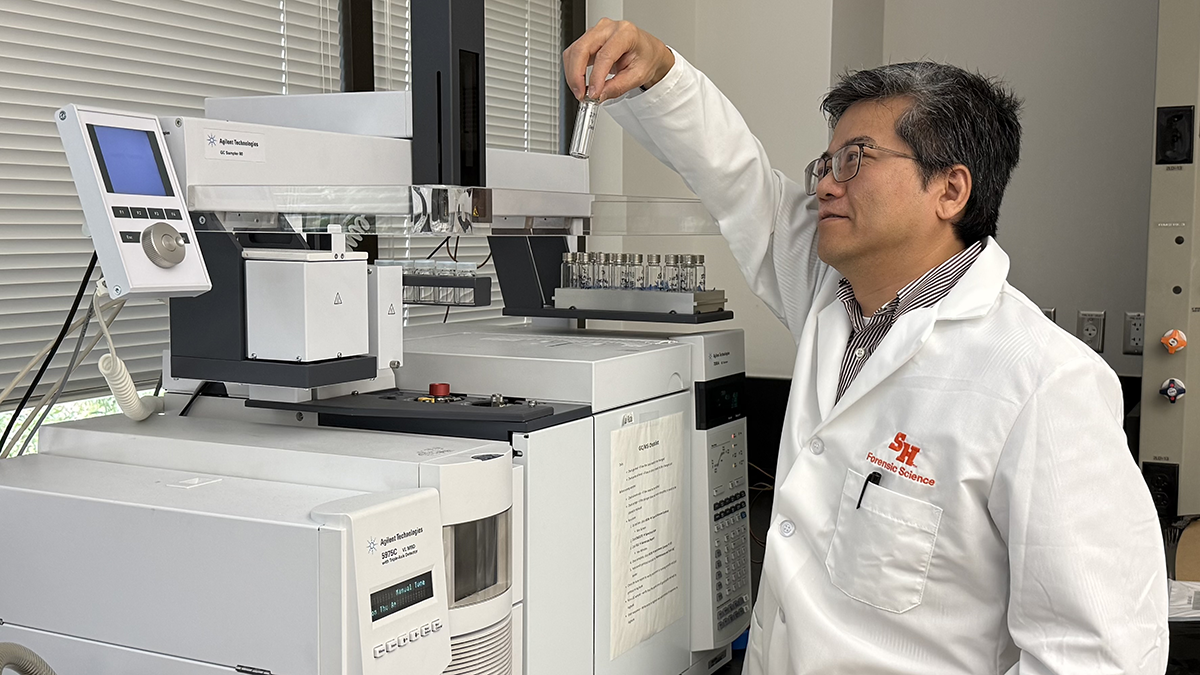
 The first patent, led by Jorn (Chi-Chung) Yu in the Department of Forensic Science, introduces a groundbreaking method for determining whether a cannabis sample qualifies as legal hemp under federal guidelines. Traditional testing methods rely on solvent-based chemical extraction, which can be time-consuming, costly and destructive to the sample. In contrast, this new artificial intelligence (AI)-powered system uses headspace gas chromatography/mass spectrometry to collect the natural chemical vapors emitted from cannabis, transforming those chemical signals into visual images. A convolutional neural network (CNN) then analyzes these images to determine whether the sample’s THC content is above or below the 0.3% legal threshold defining hemp.
By automating a process that previously required manual interpretation, the system provides a rapid, non-destructive and highly accurate way to distinguish hemp from marijuana, as well as source attribution of hemp-derived products. This innovation has promising implications for forensic laboratories, agricultural producers and regulatory agencies, which increasingly rely on efficient, field-deployable and standardized testing.
“This patent stands as a clear testament to the university’s steadfast commitment to advancing innovative scholarship. It exemplifies how SHSU empowers researchers to translate breakthrough ideas into real-world applications,” Yu said.
 The second patent, developed by Junkun Ma of the Department of Engineering Technology and his team, represents a significant advancement in plant health monitoring by enabling early detection of gall-forming plant-parasitic nematodes, microscopic pests responsible for substantial economic losses in agriculture and nursery operations.
Building on the minirhizotron concept, a system that uses underground tubes to observe plant roots over time, SHSU’s enhanced design integrates a high-resolution camera, LED illumination and an automated positioning mechanism into an underground tube to capture images of plant root systems at multiple depths and angles. These images are then stitched together and processed into a comprehensive panoramic view of the root system. Advanced image-processing algorithms analyze these panoramic images to identify the distinctive galls associated with nematode infection. This automated detection reduces the need for manual inspection and allows for faster, more consistent analysis.
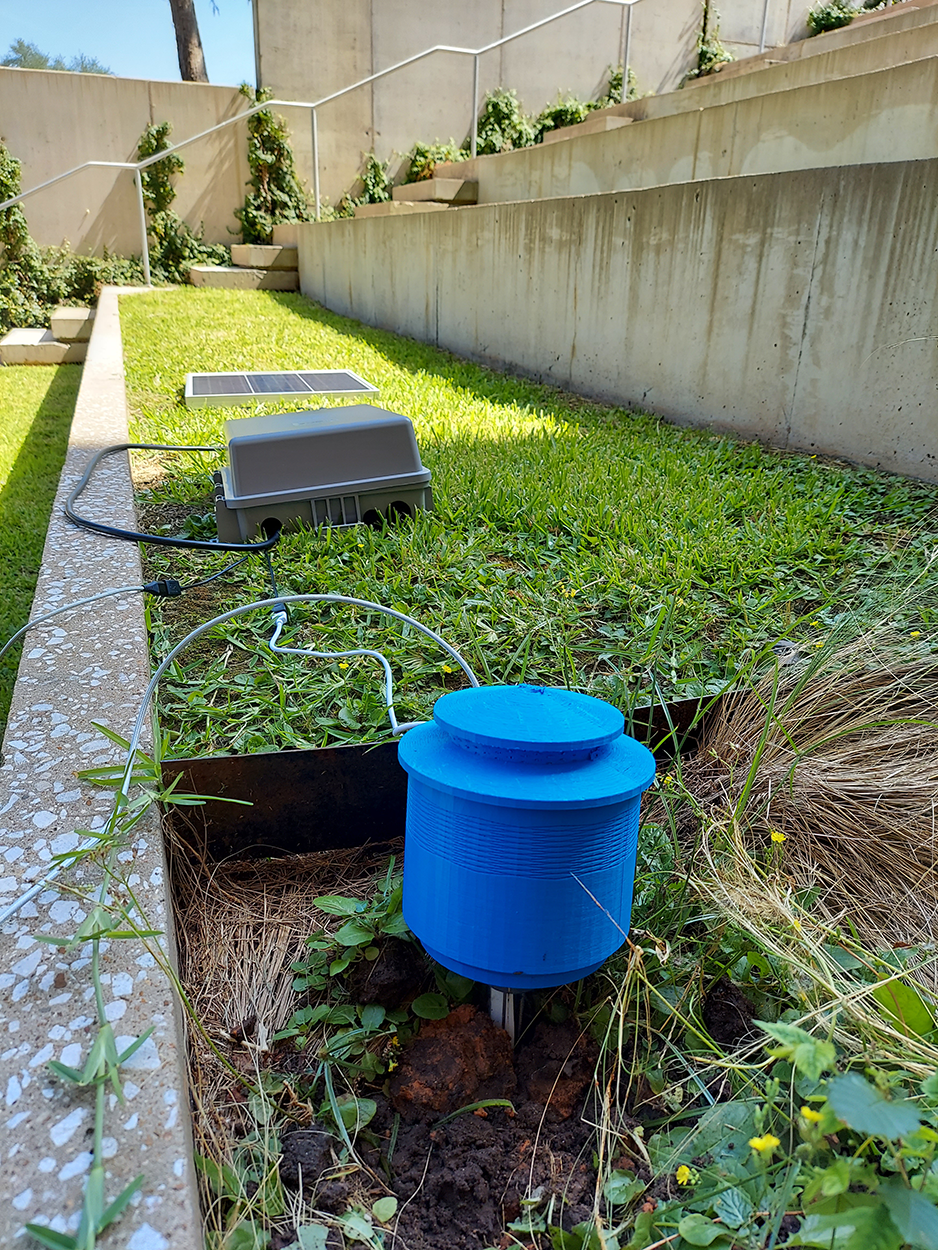
A key feature of this innovation is that the system is field-deployable with a solar-powered configuration, allowing continuous and long-term monitoring remotely. Through a web-based interface, users can access deployed devices, review real-time images, run analyses and monitor plant root health across multiple locations without disturbing the plants or soil at the site. By providing a nondestructive, real-time solution for early detection, this technology offers growers and agricultural stakeholders a practical tool to reduce crop loss, improve response times and support more sustainable farming practices.
“The team and I would like to express our sincere gratitude for the support provided by the SHSU research ecosystem, whose resources and collaborative environment made this work possible,” Ma said.
Together, these two patents demonstrate how SHSU researchers are leveraging advanced technologies, from artificial intelligence to automated imaging systems, to solve practical challenges in agriculture, environmental monitoring and forensic science. Whether it’s ensuring compliance in hemp production or protecting crops from soil-borne pests, these innovations reflect a broader university vision: harnessing scientific insight to create effective, accessible solutions that support industry needs and promote responsible resource management.
This page is maintained by SHSU's Communications Office:
-
Director of Content Communications: Emily Binetti
-
Communications Manager: Mikah Boyd