Heritage Magazine: Student Research Reaching Beyond
Heritage Magazine: Student Research Reaching Beyond
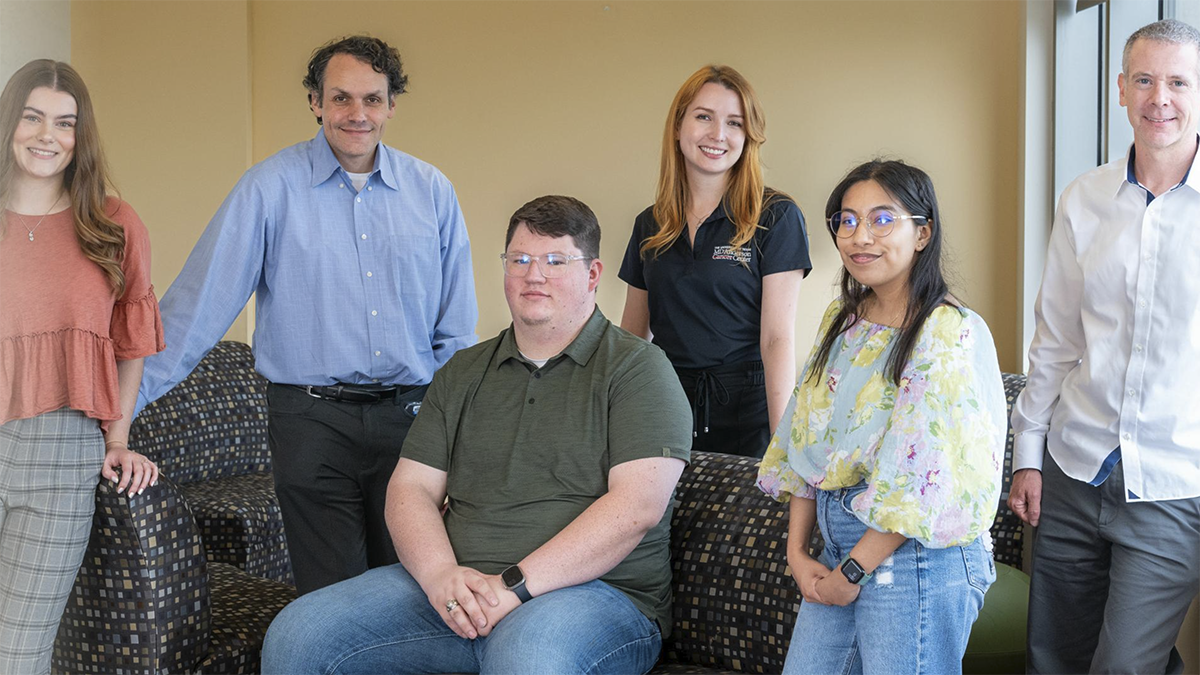
Sam Houston State University’s transformative partnerships with world-class institutions provide all students with a unique opportunity to make a difference in the world. Through its distinguished collaboration with The University of Texas MD Anderson Cancer Center in Houston, three Bearkats found themselves on the front lines of one of society’s greatest battles.
Through this connection, SHSU students Cody Griffin, Kyleigh Howard and Kenia Grimaldo were selected to participate in MD Anderson’s highly competitive Partnership for Careers in Cancer Science and Medicine (PCCSM) summer research program, a part of the Cancer Advanced Training and Learning for Young Scientists Summer Training Programs.
“This opportunity means a lot and fuels the fire to thrive and conquer anything that is in front of me,” Griffin said. “It offered a way for me to contribute to this fight and honor those who have this disease with the knowledge I have gathered through years of education.”
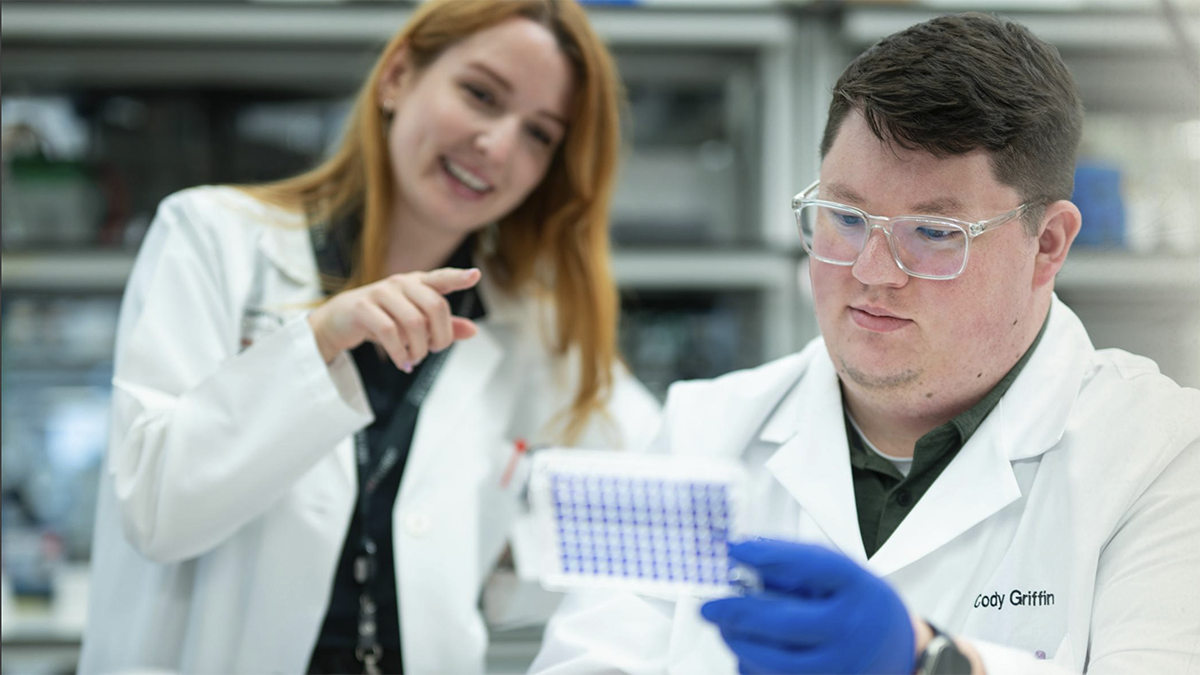
Griffin, a senior majoring in biomedical sciences with a minor in psychology, participated in lab research under Dr. Varsha Gandhi of MD Anderson’s Department of Experimental Therapeutics, Division of Cancer Medicine and Dr. Natalia Timofeeva, a postdoctoral fellow in the Department of Translational Molecular Pathology. At the end of the program, he was able to independently conduct experiments and perform data analysis.
“Science is definitely a field where you can become discouraged or confused in terms of what you want to do,” Griffin said. “Having the opportunity to come to MD Anderson and work with professionals who help with your development and make you feel at home is invaluable. Going through this process will be very beneficial to others, as it has motivated me in my career path.”
Howard, a forensic biology major, also spent her summer in the lab learning new techniques and honing her knowledge of DNA and cellular processes.
“It has definitely reaffirmed my love for science and what I want to do with my life: pursue research and lab work,” she said. “It is extremely meaningful to me to be able to put work into trying to find a cure, as I have loved ones who have struggled with cancer, including my grandpa, who is currently struggling with it.”
Howard’s mentors, Dr. Gandhi and Dr. Evan Cohen, Department of Translational Molecular Pathology, raved about her involvement and progress. Under Gandhi’s leadership, she was able to utilize her strong organizational skills to thrive in new areas throughout the process.
“I learned about staining protocols and a broad range of cancer biological topics that I know will help me in my future career,” she said. “I would definitely advise others to apply for this program, because it is very rewarding.”
Grimaldo, a recent graduate from SHSU in biomedical sciences with a minor in psychology, spent her summer learning ways to process digital data under Dr. Christopher Bristow.
“It was a unique experience because we did biomarker research, which really helped me understand how much work actually goes into diagnosing,” she said. “I know quite a few people who are fighting cancer, so it makes me proud to be able to fight that battle with them.”
In 2022, Sam Houston State launched the Building Research, Innovation, Discovery and Growing Engagement (BRIDGE) Program, a visionary initiative designed to stimulate high-impact interdisciplinary research that addresses local and regional challenges.
Supported by the Provost Innovation Fund, the program established four inaugural awards that reflect SHSU’s deep commitment to student success, regional development and societal progress. These projects engage faculty and students across departments with lasting benefits for East Texas and beyond.
The initiative includes the Biomedical Research, Innovation, Training and Employment (BRITE) Consortium, which aims to boost SHSU’s research capacity and connect students to careers in the biomedical sciences. The BRITE Consortium has stimulated applications for multiple external biomedical grants, forged new partnerships with MD Anderson and other regional institutions and funded the research projects of over 20 undergraduates.
“Our intercollegiate team has been able to broaden our impact to students across the biomedical spectrum,” said Mardelle Atkins, professor of biological sciences and one of the principal investigators for the BRITE Consortium. “It has allowed Sam Houston to offer more of these opportunities and grow our presence in the region so that when employers look to build the workforce, they will look to our students.”
Along with Mardelle, BRITE’s PIs include SHSU professors Sharmin Hasan (biomedical sciences) and Donovan Haines (chemistry), who formerly served as the chair of his department. The team had established a working relationship with Dr. Ashish Arya, program director at MD Anderson, prior to the consortium, which led to his involvement in early BRITE initiatives, such as visiting campus to discuss opportunities in the field.
“Talent is universal, opportunity is not,” Arya said. “What PCCSM tries to do is provide opportunities to those who are talented but might not have been exposed to these opportunities. We approach professors who are on the ground with these students at their universities, because they are in the best position to spot that talent.”
SHSU’s first cohort did not disappoint. During the full-time, 10-week cancer research program, the students acquired in-depth experience in basic and advanced scientific research, computational skills and translational research in the fight against cancer.
“Our long-term hope is to light a fire in motivated individuals who, at the end of their undergraduate program, are confident and enthusiastic enough to see graduate school as a realistic possibility,” Arya said.
Weekly seminars and workshops, which cover a broad range of topics, are held for all summer program trainees. However, immersive research training, while conducting a mentored research project in an MD Anderson laboratory, is the main focus of the summer program.
“Students who are inclined to go into the medical field are very interested in this type of work because it gives them hands-on experience in how research is translated to clinical practice,” said Dr. Gandhi. “Without translational lab research, we would not make any progress in regards to how we treat patients with cancer.”
Students receive a stipend of $6,800 before taxes for the program and housing is provided on a case-by-case basis. At the end of the program, the trainees present the results of their research as scientific posters alongside trainees from other summer programs at the MD Anderson Summer Experience’s End of Summer Poster Symposium.
Outside of BRITE, Atkins and her colleagues actively seek dynamic partnerships in the region to provide students with the best possible opportunities. The professors personify the university’s constant effort to utilize education in the fight for a better tomorrow.
“Our dedication to service is part of the culture here at Sam,” said Atkins, whose sentiment was echoed by the students it directly impacts.
“Take the opportunity,” said Griffin. “I was scared when I first applied, because it was the first time I have ever tried anything like this, but it has done wonders for my professional pursuits.”
Grimaldo also encouraged students to take the leap while Howard added the importance of staying determined throughout the process, a direct reflection of the tireless battle to end cancer.
“It is definitely a lot of hard work,” Howard said. “I spent many hours in the lab on experiments and sometimes they worked out, sometimes they did not. It could be frustrating at times, but in the end, it is worth it.”
For more inspiring stories about all things Sam Houston State University, read the Fall/Winter 2025 edition of Heritage Magazine here.
This page is maintained by SHSU's Communications Office:
-
Director of Content Communications: Emily Binetti
-
Communications Manager: Mikah Boyd