In the Room Where It Happens: SHSU-COM Dean Addresses Congress on the Future of Healthcare
In the Room Where It Happens: SHSU-COM Dean Addresses Congress on the Future of Healthcare
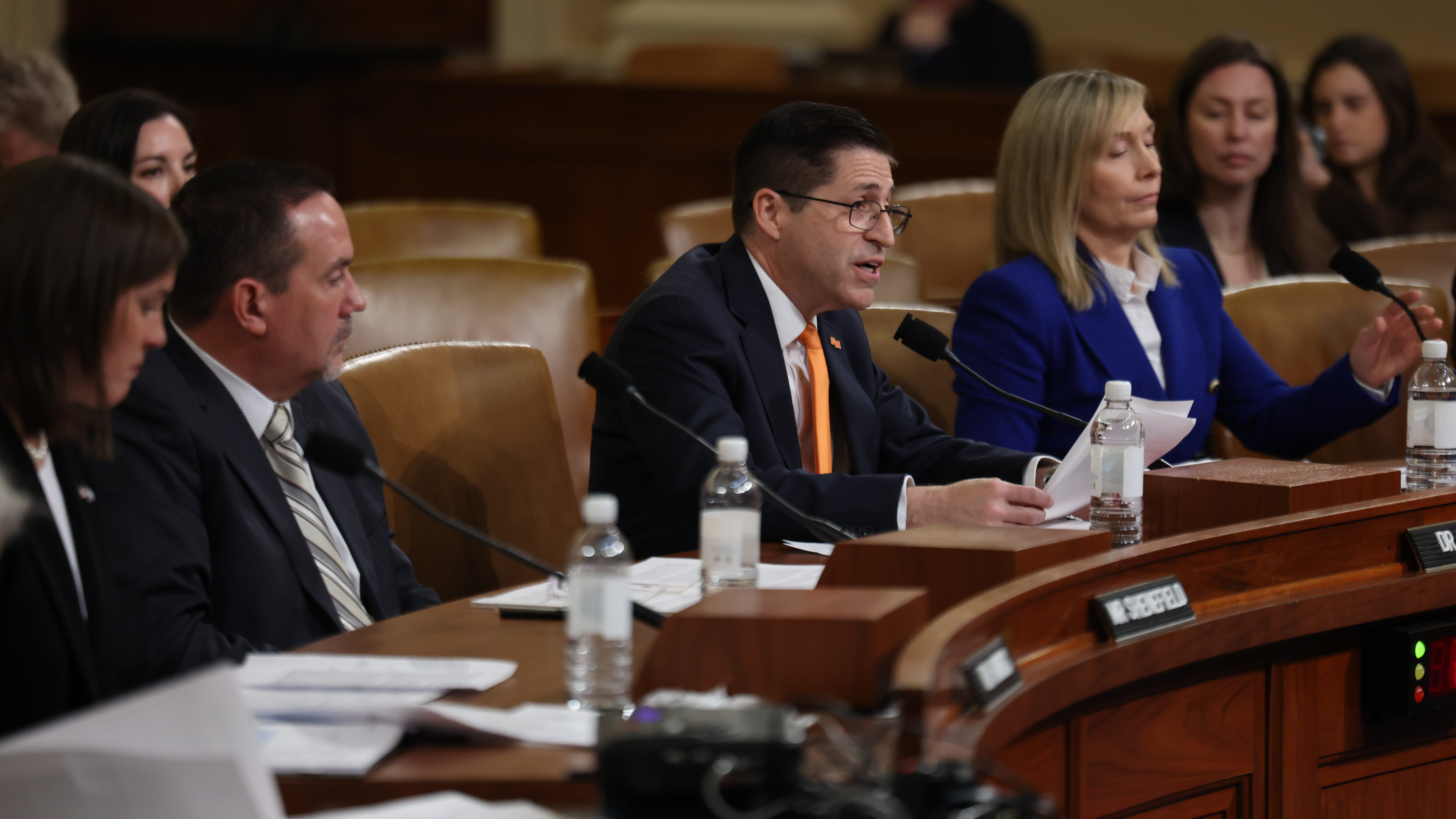
In the words of Lin-Manuel Miranda, Thomas J. Mohr, DO, found himself in “the room where it happens.”
This week, Mohr, vice president of medical affairs and dean of Sam Houston State University College of Osteopathic Medicine (SHSU-COM) stepped into that room, testifying before the House Ways and Means Committee’s Subcommittee on Health to help shape the future of America’s healthcare workforce. He brought a clear message to lawmakers: if we want to improve healthcare access across the country, especially in rural communities, we must rethink how we train and support the next generation of physicians.
The opportunity reflects a strong partnership. With the support of the American Association of Colleges of Osteopathic Medicine (AACOM), SHSU-COM joined a national conversation on graduate medical education, workforce development and access to care. It was a meaningful moment not just for one institution, but for osteopathic medicine as a whole to be part of a hearing focused on advancing healthcare for all Americans.
Drawing on more than 25 years of experience developing residency programs, many in rural and underserved communities, Mohr spoke to how graduate medical education financing directly shapes where physicians train and ultimately where they practice.
“Graduate medical education financing is ultimately a workforce investment. Aligning funding structures with where care is delivered, supporting community-based training growth, and ensuring predictable and equitable support can strengthen physician supply in both urban and rural communities alike,” said Mohr.
At the center of the discussion was how graduate medical education is funded in the United States. Today, Medicare GME funding is largely tied to hospital-based training models developed decades ago. While that system has supported large academic medical centers, it can create real challenges for smaller hospitals and community-based programs that are often best positioned to train physicians in rural and underserved areas.
For Mohr, this is where policy and access to care intersect. Without more flexible and predictable support for community-based training, it becomes more difficult to build the very programs that help address physician shortages where they are needed most.
That discussion also brought attention to a critical challenge in the physician pipeline.
While DOs and MDs are both fully licensed physicians, some residency programs continue to require osteopathic medical students to take the MD licensing exam in addition to COMLEX-USA in order to be considered.
“There is no medical basis for these policies, as DO and MD degrees and both medical exams lead to unrestricted physician licenses in all 50 states,” said Mohr.
The impact is significant. It adds time, cost and complexity for students who are already navigating one of the most demanding phases of their training. In many cases, it requires duplicating effort simply to be considered, not to build additional competency.
At a time when communities across the country, particularly in rural areas, are facing physician shortages, those barriers carry real consequences. Fewer pathways into residency ultimately mean fewer physicians entering the workforce where they are needed most.
U.S. Representative Carol Miller of West Virginia spoke directly to the issue, emphasizing the importance of removing barriers for osteopathic medical students.
“I’m pleased to see that the osteopathic medical schools are represented here today. As our country grapples with worsening physician shortages, we’ve got to eliminate the unnecessary barriers that prevent highly qualified osteopathic medical students from accessing residency opportunities. For a rural state like my own, we cannot afford artificial barriers to physician distribution.”
The conversation also turned toward the future of technology in medicine and how that might shape care in rural communities. In an exchange with U.S. Representative Kevin Hern of Oklahoma, Mohr acknowledged that the pace of innovation is accelerating quickly and emphasized the need for medical education to intentionally keep up.
He pointed to SHSU-COM’s proactive approach through the development of its Medical Artificial Intelligence Institute, describing its potential to extend advanced tools into rural communities and support physicians in delivering care more effectively while reducing administrative burden.
In that same exchange, Mohr also recognized the work of osteopathic colleagues across the country, including leadership at Oklahoma State University Center for Health Sciences, highlighting a shared commitment to training physicians in the communities that need them most.
Throughout Mohr’s testimony, one theme remained clear: “Students who train in underserved areas are nearly three times more likely to practice there—and four times more likely to provide primary care.”
To be part of that conversation, alongside national leaders and policymakers, marks an important step forward. It reflects the growing voice of osteopathic medicine and a collective commitment to ensuring that access to care is not determined by geography.
For SHSU-COM, it was an opportunity to represent Texas, rural communities and the future of medical education, while reinforcing the role osteopathic medicine plays in strengthening primary care and expanding access to care across the country.
And in a room focused on the future of healthcare, that voice carried weight.
This page is maintained by SHSU's Communications Office:
-
Director of Content Communications: Emily Binetti
-
Communications Manager: Mikah Boyd