Spotlights and Testimonials
charise lincoln
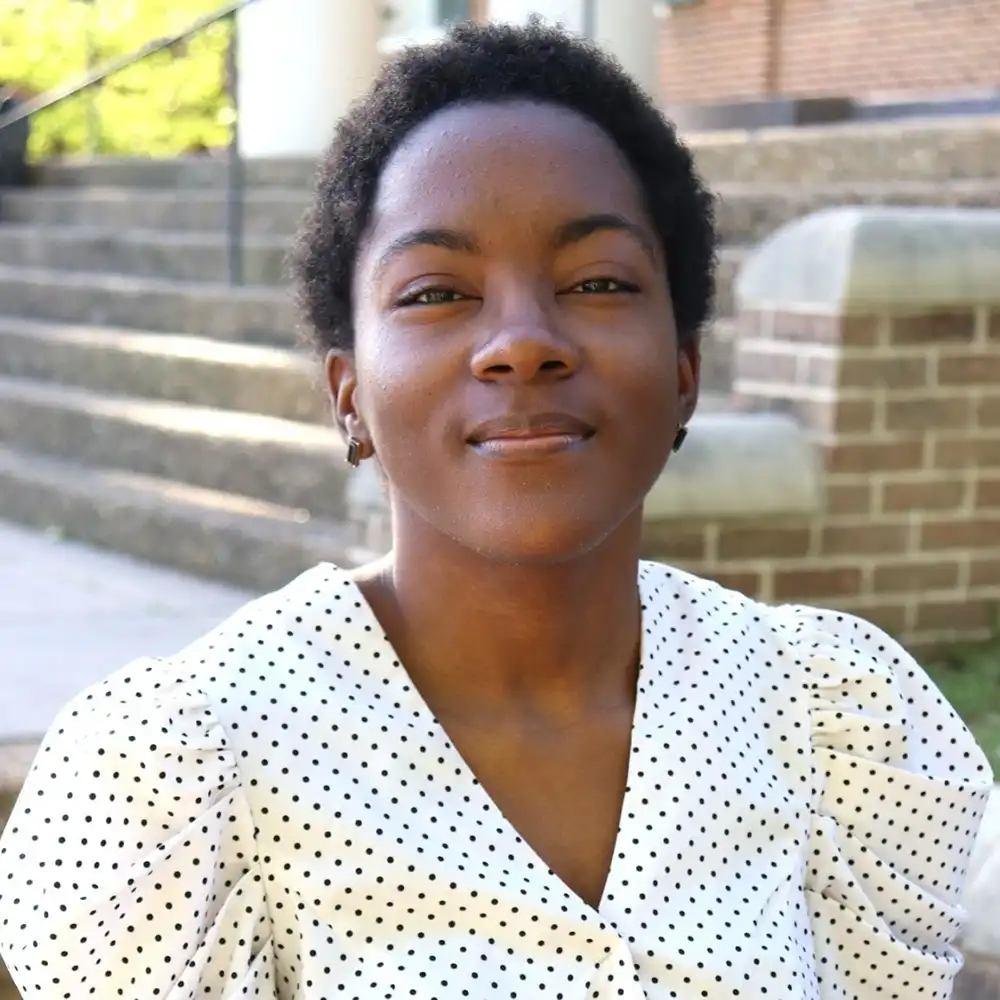
Last November, SHSU Senior Charise Lincoln presented at the TEDxSHSU Conference about her three-step plan to persevering in college: mindfulness, community, and calculated risks. In this interview, Charise discusses how she came up with this plan, how her SHSU community has helped her with her goals, and advice for other students.
In Fall 2019, Charise experienced what she described as her last semester as a high achieving honor student. Both her step-father and her mother passed and soon after, the COVID-19 pandemic would result in global lockdowns. “With her [mother’s] death began a month full of anxiety, terror, and panic,” Charise said in her Ted Talk, “for me, the world had stopped.” Despite this, Charise decided to continue her studies and become an advocate for students to persevere.
“It was mostly trial and error,” She explained when asked how she created her three-step plan. “I realized a lot of my struggles came down to those three topics. Like, I wasn’t aware of my emotions or my feelings. I just kept kind of pushing forward and I kept breaking down, crumbling. I realized there was a problem I was able to look at with kindness, and that would actually help that go away. And then the same thing with community. When my parents died, I didn’t have any more friends here on campus. I didn’t have support anymore. And my first thought process was, ‘I can do it all by myself. I don’t need any help.’ And then I realized I need a lot more than I think I do. Once I started letting people in, bit by bit, it became a lot easier. For taking calculated risks, instead of taking risks, I didn’t do anything at all. I didn’t realize that nothing was also a choice too, right? So I had a choice to do something, and then I realized the more risks I took that I know I could do, that the stronger it made me as a person.”
Of the three steps, Charise attributed a lot of her ability to persevere to the community she built at Sam Houston State University, including the faculty and staff. She thanked Michelle Haynes and the counseling team from the Counseling Center for helping her through the grieving process; Bradley Seaberg, Lecturer from the Department of Psychology & Philosophy for “single handedly [making] me so excited to keep going and keep learning”; and Michelle Meers from TRiO Student Support Services for helping her navigate college as a First-Generation student and supporting her as she prepared for her Ted Talk. Charise added that the size of the community isn’t as important as knowing that they genuinely support you and want to help you succeed. For those struggling to find a community, Charise recommended finding a small close-knit organization, searching for groups online, or even participating in group therapy sessions.
The social support from the community has also helped Charise feel confident about her future career goal of becoming a counseling psychologist. “My [psychology] professors work really, really hard to make sure that I can go to grad school, and I’m not blindsided by grad school,” Charise explained. She also plans on continuing her research on the impacts of astronomy on mental health and nature-based interventions as a more accessible method for those who are less privileged.
Charise offered the following for those students considering speaking at a conference:
How did you, while preparing for TEDxSHSU, overcome all the comparison to other presenters and the imposter syndrome? Community helps the best with overcoming imposter syndrome. I’d get stuck in my head and then I won’t take opportunities, get too scared to take risks, I’m just ripping in my head: “I can’t do this, I’m a failure, I’m not worth it.” And then whenever I get someone outside of me who talks to me, they’re like, “You can do this. I can see you. You’ve got this.”
When it comes to who that outside perspective comes from, that person has to be a safe person that respects you and your respect for them. If it’s a safe person that respects you deeply, I think that it holds more value.
When I got approved [to present at TEDxSHSU], I reached out to everyone [in my community network] because I felt so insecure at first. They could see me better than I could see myself. For the entire time, they were like, “Why are you so stressed out right now? You’re going to do fantastic,” and I’m like, “No, I’m not, I’m not going to do fantastic at all,” but then I did do fantastic.
My partner really helped giving me support. I don’t think I would have done it without her, honestly. She was so supportive, and I just wanted to quit so many times. Whenever I gave my speech in front of her and she gave me so much praise and made me realize that I am capable, people will listen to my story.
What would you say to other students who are considering doing a TED Talk or other conference? The TED Talk hosts are trying to convey a journey and an idea to the people. People come away after listening to these speeches with renewed hope or more knowledge about something, and you can always provide hope and knowledge to people. I think anyone can do that. So, any future speakers just know that you can provide something, even if you don’t think you can, you can. They chose you for a reason. They see that in you. Now it’s time for you to show it to other people.
What did preparing for TEDxSHSU look like? A TED Talk coach will be assigned one to two TED Talk speakers, and for six months they’re going to work one-on-one with the speakers, verifying their speech, listening to the speech and giving their input, and if they’re available, they can go [to the TED Talk conference] and listen to their speakers talk, give them more support. My coach was a previous TED Talk speaker. She talked about food insecurity and I felt pretty intimidated because she seemed so educated, so well-informed. It was really, really cool. She broke down what the overall goal was of a talk, and she made the steps a lot more manageable. She took me at it one day at a time. She gave me lots of great support. I think one time we revised and reread the speech like ten times, back-to-back, for almost two hours.
I’m much more used to talking in very small environments. This is probably the largest group that I’ve ever spoken to in my life. I had to practice my speech at least twice as much as I normally do, because there were just so many people there.
Charise is set to graduate August 2024 and plans to start grad school during the upcoming academic year. Charise also presented the first talk on her research on the impacts of astronomy on mental health, “Impact of a Total Solar Eclipse”, this past April at SHSU’s Undergraduate Research Symposium.
We are excited to connect with you
visit us on campus
College of Humanities and Social Sciences
1901 Avenue I
Suite 390
Huntsville, Texas 77340
contact us
Phone: 936.294.3552
Email: psychology@shsu.edu
Mailing Address:
College of Humanities and Social Sciences
Box 2447
Huntsville, TX 77341
business hours
Monday - Friday
8:00 a.m. - 5:00 p.m.