SHSU Receives $400,000 From NASA COMPASS Program
SHSU Receives $400,000 From NASA COMPASS Program
Houston, we have a solution.
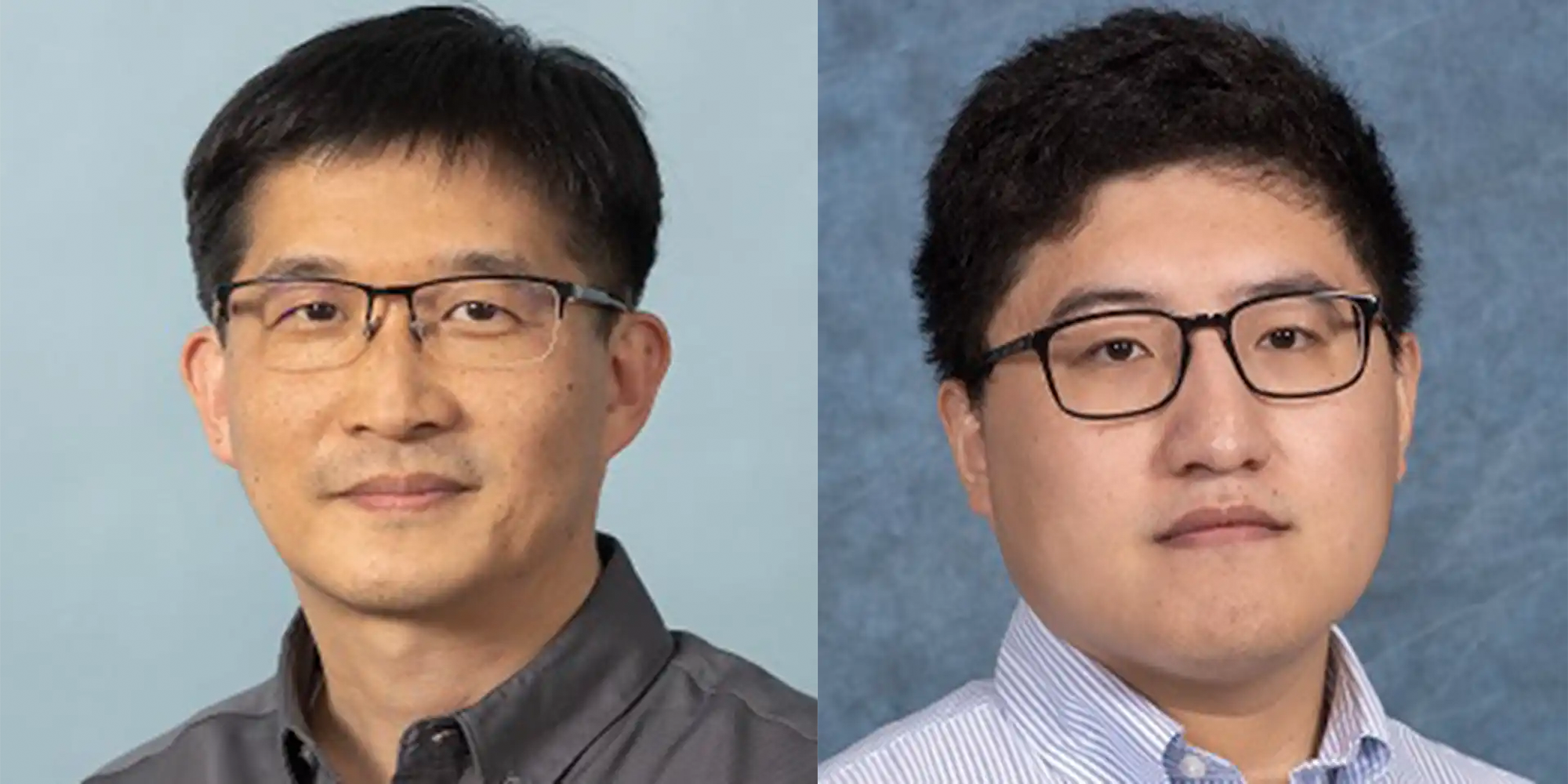
Sam Houston State University computer science faculty members Haodi Jiang and Hyuk Cho received a $400,000 NASA Collaborative Opportunities for Mentorship Partnership and Academic Success in Science (COMPASS) grant.
Haodi Jiang and Hyuk Cho from the Department of Computer Science have received a two-year grant that will connect SHSU students and researchers at the New Jersey Institute of Technology (NJIT) with NASA’s Goddard Space Flight Center.
The NASA COMPASS project is a two-year research and workforce-development initiative led by SHSU in collaboration with NJIT and the NASA Goddard Space Flight Center. The project will use artificial intelligence and machine learning to reconstruct more than a century of solar extreme ultraviolet observations, helping scientists better understand long-term solar variability and improve space-weather modeling. Each year, two SHSU students will be selected to participate in summer research experiences at NASA Goddard Space Flight Center.
The team will also build on the Surya Heliophysics Foundation Model (Surya), NASA’s AI tool for solar data, as they develop new ways to reconstruct and forecast solar activity. Equally important, this grant reflects the college’s commitment to providing students with hands-on, real-world experiences that prepare them for future careers.
“This project not only shows the College of Science and Engineering Technology’s commitment to connecting students with researchers, external partners and real-world learning experiences, but also broadens SHSU’s role as a leader in artificial intelligence and scientific discovery,” Jiang said.
SHSU students will participate through paid research appointments and contribute directly to the project’s AI and space-weather research. They will receive structured technical training, work closely with faculty and collaborating mentors and take part in regular research and professional-development activities.
Over the next two years, the project will roll out in stages. In the first year, the team will develop and test its AI methods, train students and establish research and mentoring partnerships between SHSU, NJIT and NASA Goddard Space Flight Center.
In the second year, the team will expand their work to cover even more historical data and prepare new research tools for the wider scientific community. Student training, publications, conference presentations, project updates and the annual showcase workshop will remain key parts of the project.
The workload will be distributed between the faculty members with Jiang leading AI, solar physics and space-weather research. At the same time, Cho will focus on mentoring students, providing training and guiding workforce development to help students prepare for their future careers.
Through interdisciplinary collaborations, the project will enhance undergraduate education, build workforce readiness in emerging STEM fields and contribute valuable insights to the global scientific community’s understanding of solar variability and space weather.
“We are also excited about the opportunities this project creates for SHSU students,” Cho said. “It provides direct, funded pathways for them to participate in meaningful research, build technical and professional skills, interact with collaborators and NASA scientists, present at national conferences and gain exposure to future opportunities at NASA and in graduate STEM programs.”
This project is supported by the National Aeronautics and Space Administration (NASA) under Award No. 25-COMPASS25-0056.
Any opinions, findings and conclusions or recommendations expressed in this material are those of the author(s) and do not necessarily reflect the views of the National Aeronautics and Space Administration.
This page is maintained by SHSU's Communications Office:
-
Director of Content Communications: Emily Binetti
-
Communications Manager: Mikah Boyd