Beyond the Measure Episode Nine: Michelle Spencer
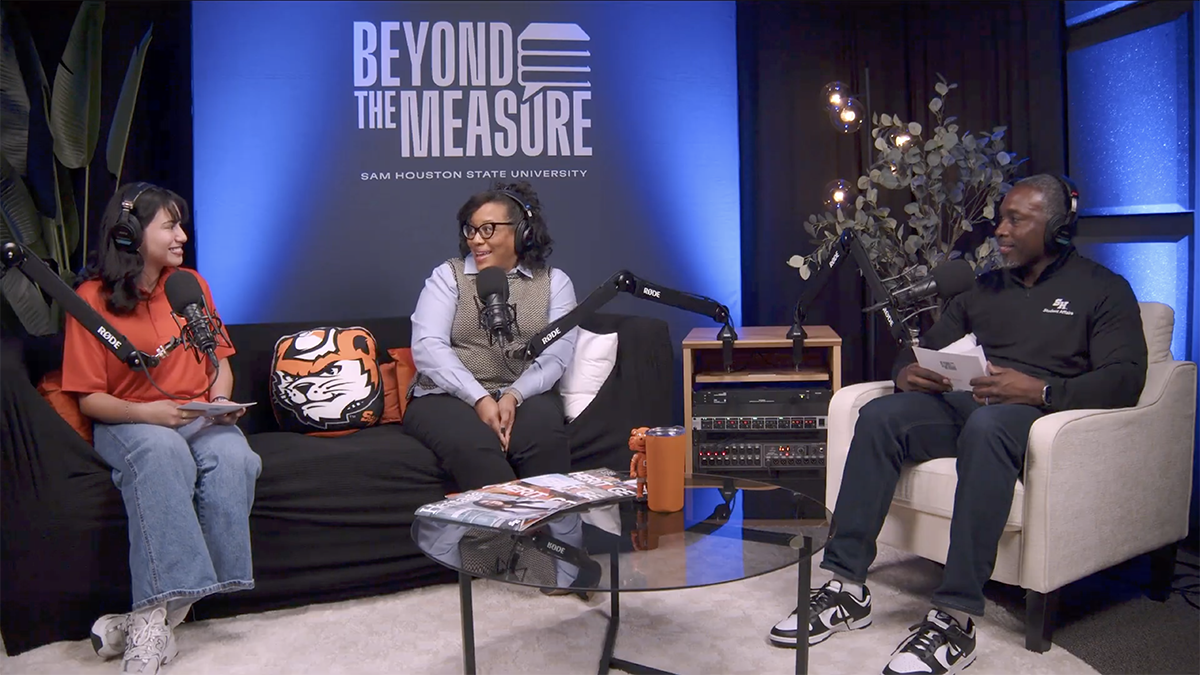
Beyond the Measure Episode Nine: Michelle Spencer
In this latest installment of Beyond the Measure, Michelle Spencer ('91), CEO of the Walker County Boys & Girls Club, chats with our hosts about her experience at Sam Houston State University and how she helps others lead lives of service. The following lays out the discussion in a convenient Q&A format. For the full Beyond the Measure experience, watch the full episode below or on YouTube.
When you think back on your time at Sam Houston, how did it shape the path that you ended up taking?
I was a transfer from Blinn Junior College in College Station, so coming to Sam Houston, it was almost like starting all over: larger university, more people. I had to start gaining friends and trying to connect. I was a MassCom student, public relations and promotions, so that kind of threw me into being a part of the community. I also joined a sorority, which shaped me into being in the community that I'm in now.
For those who may not be familiar, can you tell us a little bit about the Boys and Girls Club of Walker County and the role that it plays in this community?
What we provide is after-school care for kids that attend Huntsville ISD and summer camp, which is open to anyone that would like to drop their kids off. Our after-school program consists of homework assistance, learning life skills, soft skills, and being just a kid in this society. They’re able to form relationships and learn things while their parents are working around the clock to try to make ends meet. So, when a parent or guardian picks up their child, homework is completed, they've had a warm meal thanks to our partnership with Huntsville ISD and they're able to go home and just relax. We're able to fill in those places where they might stress.
Working with young people at such an important stage in life carries a lot of responsibility. How do you approach this as a leader?
We try to hire staff that have a passion for children, not just someone that needs a job, because it takes a special person to be able to connect to a kid, especially in this day and age. Many of the students that work for us are youth development professionals, are in education or psychology and they're able to see what it's going to be like if they become a teacher. We go through rigorous training: trauma-informed training, bereavement training, bullying training. Our kids come every day, and they know what to expect when they come to the club. They know that someone's going to hold them accountable, and that there's someone there that will listen to them.
What are some of the biggest challenges facing youth in our community right now?
I hate to keep going back to COVID, but it has had lasting effects on our children like delayed learning. When kindergarteners from the first year of COVID came back to us in the first grade, they had no social skills. So, we're working with them to deal with that. Teaching them social skills is so much more important than ever before, as well as dealing with their anxiety.
Could you share a story that really captures the kind of difference in the Boys and Girls Club that or that the Boys and Girls Club is making now?
I think kids need support more than ever. Having a responsible adult, someone that they can count on, makes a huge difference. At the club, there are no devices other than what we provide, it requires them to communicate, to create relationships outside of their devices and them holding their heads down. We fill a gap that has developed thanks to devices and social media and things like that; we require students to interact and actually be able to talk and express how they feel.
How do you measure success for an organization like the Boys and Girls Club?
We're in the business of prevention, so if you give a kid the skills, we're hoping that they're not going to become a part of the system. Seeing your kids out in the community as adults is part of the success and you see the impact. You see that they turned out to be really great kids. We see the proof in the pudding when they come back and they are now bank tellers, working at the local hardware store; they’re saying, “Yes, ma'am, no, ma'am,” counting money properly and they're showing all the social skills that they were taught at the Boys and Girls Club. So, you don't necessarily see it right away for us; you see it down the line with them being productive, responsible citizens of our communities.
What's something that surprises people about working at the Boys and Girls Club?
Many people think that we're daycare and we're not. We're an after-school program. Kids don't come and just sit and wait for the parents to show up to pick them up. When kids come to us, we do announcements, we celebrate birthdays, we hold them accountable when it's report card time or progress report time. When they come to us, there's a hot meal and then we start to rotate them through our department. Those kids are gaining life skills, having fun. We have a partnership with Silvan Learning Center that takes kids who are two to three reading levels behind, and when it's assessment time in April, they are on reading level or one to two steps ahead. We're also relatively inexpensive; it's part of the Boys and Girls Club way.
Why has the relationship between the Boys & Girls Club and the Center for Community Engagement remained so important to you?
I was a part of the original advisory board, and it was just this community gathering where we were able to talk about the services that are provided in our community and how we could connect students to doing community service. So, I joined selfishly with the mindset of, “How can I connect every department on Sam Houston campus to the Boys and Girls Club?” But what I got from that was we got really great quality students coming to work for us. We got the opportunity to be on some advisory boards for new things coming to Sam Houston. So, it's important for us as a nonprofit to be connected and to be in the know, so that we know the things that are changing so that we can adapt. And how do we adapt? Well, by using a department at Sam Houston to adapt without it costing me a lot of money. I'm connected so that I can provide the most quality service to the kids and families that we serve.
How can SHSU students contribute and get involved with the Boys and Girls Club?
We have work-study students through the Center for Community Engagement. We've had interns. Last year, I think there were 1,700 Sam Houston students that came through our doors and volunteered for one specific event at the club or were working on a school project with our students. To volunteer, you just go on our website and click on employment opportunities, and you'll see the volunteer tab. There's a form for an individual and a form for a group. Then, tell us what you would like to do, whether it's a money management class, a health fair or a day of community service. So, anyone who would like to volunteer, we're a simple phone call away.
What does it mean to see Bearkats investing in the same community that you now serve?
Even though they're only here for a short time, what they learn here in our community, they take back to wherever they're living. They take those pieces, the community awareness, with them to wherever they are. When I was a student here at Sam Houston, community service was not yet a pillar of the university, although there were things that I still did in the community. But when I moved back here to take on leadership of the Boys and Girls Club, I thought I understood the community based on being a student at Sam Houston, and I didn't. Bringing SHSU students from up the hill to volunteer at Boys and Girls Club, CASA or Safe House really does give them a sense of belonging and usefulness. That's part of what we do at Boys and Girls Club with the students that we serve.
When you reflect on that journey you were just talking about from student to CEO, what are you most proud of?
This organization has been around for over 20-some years, and of that, I've been here 21. To go from a $180,000 budget serving about 30 kids to a $1.3 million budget serving well over 200 kids, alongside an adult education and literacy program where we provide GED and English as a Second Language and two certifications, CNA and phlebotomy, I feel like I've left a legacy. In all honesty, if I were to retire today, I'd be happy with the work, the staff and the support that we’ve been able to build. I bleed Boys and Girls Club and Bearkat. Sam Houston made me who I am, and now I'm able to do the same in our community.
What excites you most about the future of the Boys and Girls Club at Walker County?
Continued growth. We are expanding to Trinity County, the Boys and Girls Club there closed and so we are expanding our services there. Growth is the biggest piece right now, and we're kicking off a capital campaign for the next 36 months to raise funds to expand our existing building here in Huntsville because we've outgrown the space and then expand to Trinity. I have bigger plans to possibly be in Madisonville, plans to be in New Waverly. We're not there yet, but that's the plan. I think I have about another 10, 15 more years in me to make that happen.
If a student today felt called to make a difference, but doesn't necessarily know what to do, what advice would you give them?
First of all, they should go to that one professor they trust and tell them that. If I know that professor, they're going to work really, really hard to get them where they need to be. If they're unable to find that one person, we're open to taking them to a whole other place of confidence and guidance. We've had students who thought they wanted to be a teacher and changed their minds. We've had some students who wanted to be mathematicians and they were able to do that at the club. We provide opportunity. So, if a student has a thought and wants to make an impact but doesn't know where to start, have them call us. We'll figure out a place for them and put them to work. The skills that they've learned here at Sam Houston, we could definitely use.
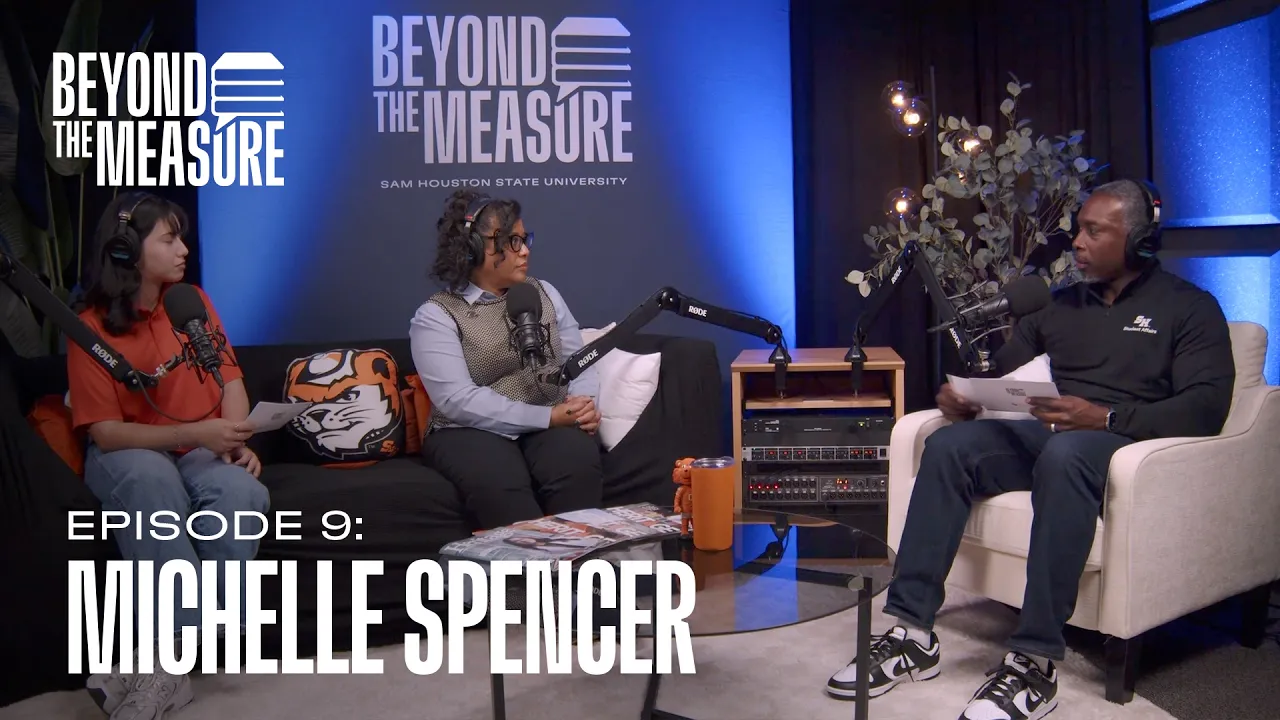
In today's episode, our hosts sit down with Michelle Spencer to talk about how she makes a difference in the community as the CEO of the Walker County Boys & Girls Club. Tune in to hear how she extends a hand to not just grade-schoolers, but to fellow Bearkats looking to give back to the city they call home.
This page is maintained by SHSU's Communications Office:
-
Director of Content Communications: Emily Binetti
-
Communications Manager: Mikah Boyd