Pecan
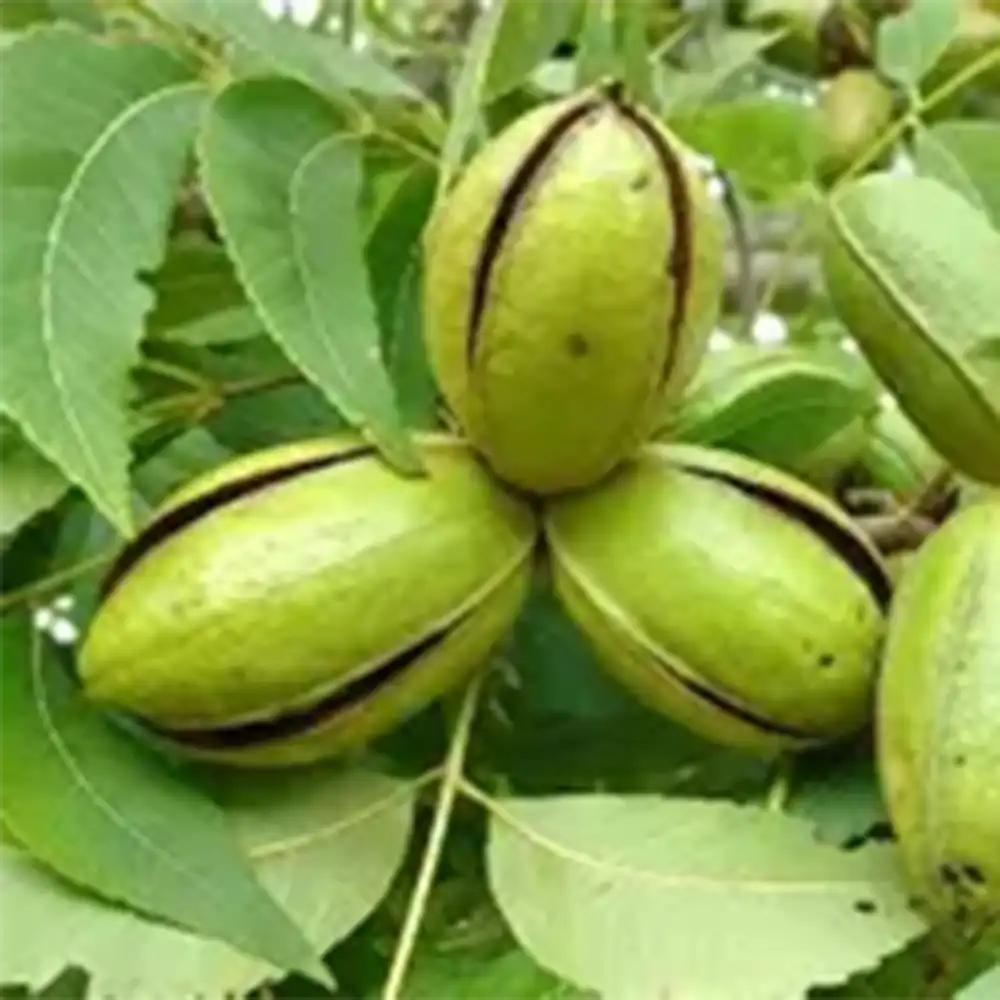
The pecan, scientifically known as Carya illinoinensis, is a large deciduous tree valued for its nutritious nuts and strong wood. Native to North America, particularly the southern United States, the pecan has become a staple crop for both commercial growers and home orchards. Its nuts are rich in healthy oils, protein, and essential nutrients, making them a popular ingredient in cooking and baking. Beyond their food value, pecan trees are also admired for their beauty and shade, contributing to both landscapes and agriculture.
Pecan trees grow best in warm climates with long growing seasons, as they require many frost-free days to develop a full nut crop. They thrive in deep, well-drained soils with plenty of room for their expansive root systems. Sandy loam or loamy soils are ideal, as they provide the right balance of water retention and drainage. Adequate sunlight is essential for strong nut production, as pecans grow poorly in shaded conditions. For proper growth and nutrient uptake, pecans prefer a soil pH between 6.0 and 7.0, which is slightly acidic to neutral. Consistent watering, especially during dry spells, helps young trees establish and supports nut filling in mature trees.
As with many crops, pecan trees can encounter certain pests that may be present in orchards or home plantings. Aphids are one of the most common, feeding on the sap of leaves and sometimes causing reduced vigor. The pecan nut casebearer is another insect that may appear, targeting young nuts in the early stages of development. Webworms may build webs in the branches and feed on foliage. Additionally, stink bugs can sometimes feed on the developing nuts. While these pests are part of the ecosystem, healthy pecan trees are resilient and continue to provide strong harvests when well cared for.
The pecan tree is a remarkable crop that combines beauty, resilience, and productivity. With the right growing conditions—ample sunlight, deep fertile soil, proper moisture, and the correct soil pH—pecans flourish and provide abundant harvests of nutritious nuts. This tree stands as both a valuable agricultural crop and a cherished part of southern landscapes, enjoyed by growers and consumers alike.