Hops
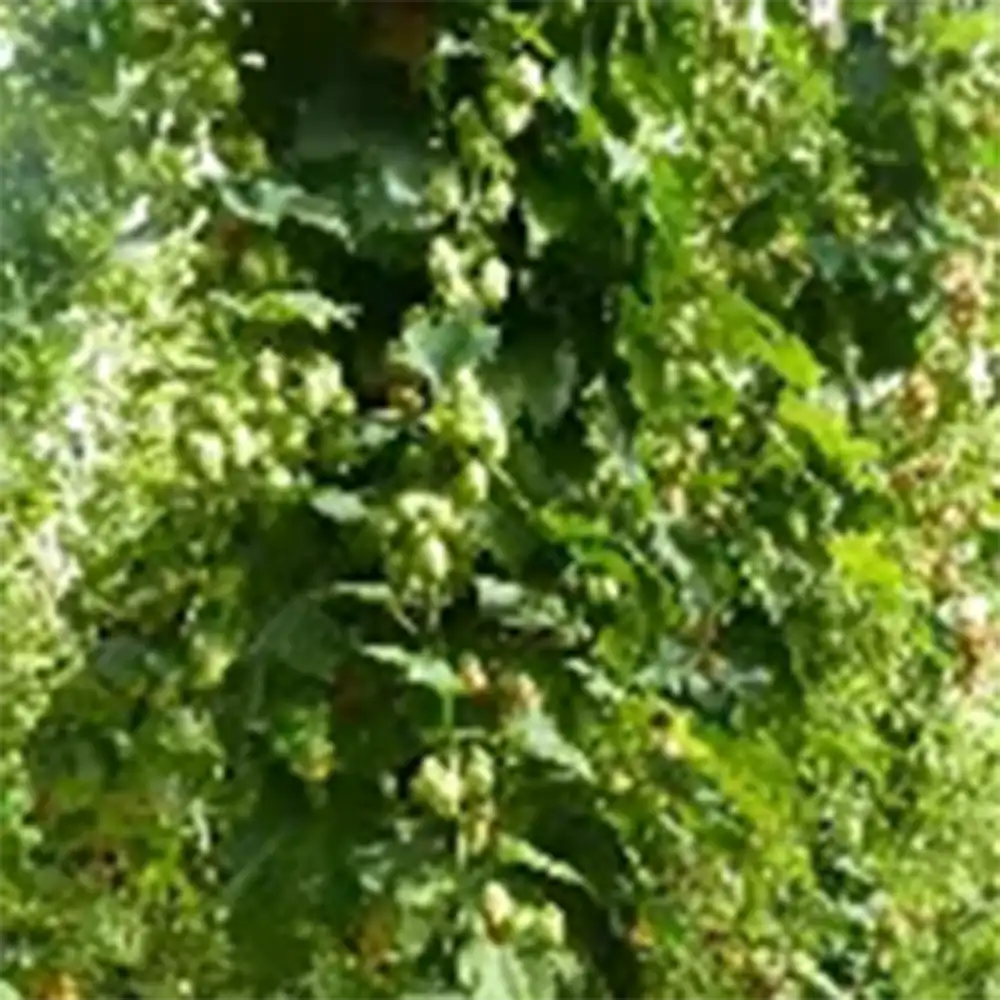
Hops are an important and versatile crop known for their vigorous climbing vines and distinctive cone-shaped flowers. The scientific name for hops is Humulus lupulus. The plant is highly valued for its aromatic flowers, which are used to add flavor and fragrance in brewing, herbal preparations, and even as ornamental plants. With their rapid growth, lush green foliage, and attractive cones, hops are a striking addition to gardens and fields alike.
Hops grow best in temperate climates where summers are warm and days are long. They require full sun, ideally at least 6 to 8 hours per day, to support strong vine growth and flower development. Hops are perennial plants that return year after year, growing from underground rhizomes. They thrive in well-drained, fertile soils rich in organic matter. Deep, loamy soils provide the best conditions for root development, though sandy or clay soils can also be improved with compost. Because hops can grow over 20 feet tall in a season, they need strong trellises or supports to climb. The ideal soil pH for hops ranges between 6.0 and 7.5, which is slightly acidic to neutral, allowing the plant to absorb nutrients effectively. Adequate water is important during establishment and cone development, but good drainage is essential to keep the roots healthy.
Although hops are vigorous, they can face a few pests. Aphids are common, clustering on young shoots and leaves where they feed on plant sap. Spider mites may also appear in hot, dry weather, leaving fine webbing and small yellow spots on leaves. Leafhoppers are another pest that may feed on foliage, causing speckling or reduced vigor. Caterpillars and beetles sometimes feed on leaves or cones, though they are usually less damaging when managed early. Many of these pests can be controlled with good cultural practices such as maintaining clean fields, encouraging beneficial insects, and ensuring proper spacing for airflow.
Hops are a hardy and rewarding crop that combine ornamental beauty with practical use. Their towering vines, attractive flowers, and aromatic qualities make them a valuable plant for both gardens and larger-scale cultivation. With the right soil, sunlight, and care, hops thrive and provide abundant harvests year after year.