Elderberry
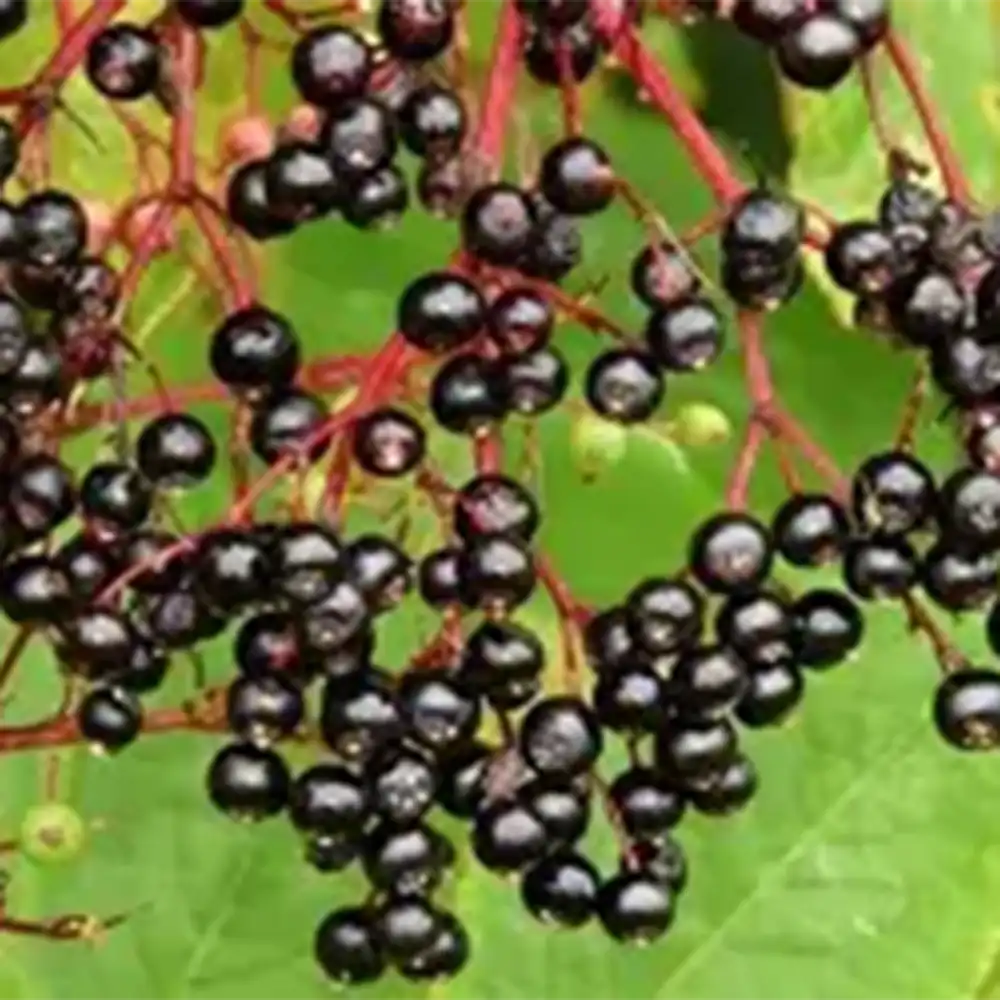
Elderberry is a fruit-bearing shrub known for its small, dark purple berries that are used in foods, juices, teas, and natural wellness products. The scientific name of elderberry is Sambucus nigra, and it has become popular in gardens, orchards, and farms for its beauty, productivity, and usefulness. Both the berries and the flowers are valued for their rich flavor and versatility.
Elderberries grow best in temperate climates with cool to mild winters and warm summers. They are typically planted in early spring and begin producing fruit by their second or third year. Elderberry plants thrive in full sun but can also grow in partial shade. They prefer moist, well-drained soils rich in organic matter. Consistent watering is important during the growing season, especially while the berries are forming. The ideal soil pH for elderberry cultivation is between 5.5 and 6.5, which is slightly to moderately acidic. These shrubs can be planted in garden beds, along fences, or in rows as part of a small orchard.
While elderberry plants are generally strong and adaptable, they can face a few pests. Aphids are common and can cluster on new growth, feeding on the sap of the plant. Elder shoot borers may also appear and tunnel into young stems. Other pests that might visit elderberry bushes include Japanese beetles and spider mites. These insects may feed on the leaves or flowers. Farmers and gardeners use pruning, natural predators, and organic pest control methods to help protect the plants.
Elderberry is a beautiful and productive crop that is valued for its fruit and flowers. Its ability to grow in a variety of conditions, along with its many uses in food and wellness, makes it a popular choice for home gardeners and commercial growers alike. Whether made into syrup, jelly, tea, or enjoyed in other forms, elderberries are a unique and beneficial addition to any farm or garden.