Blackberry
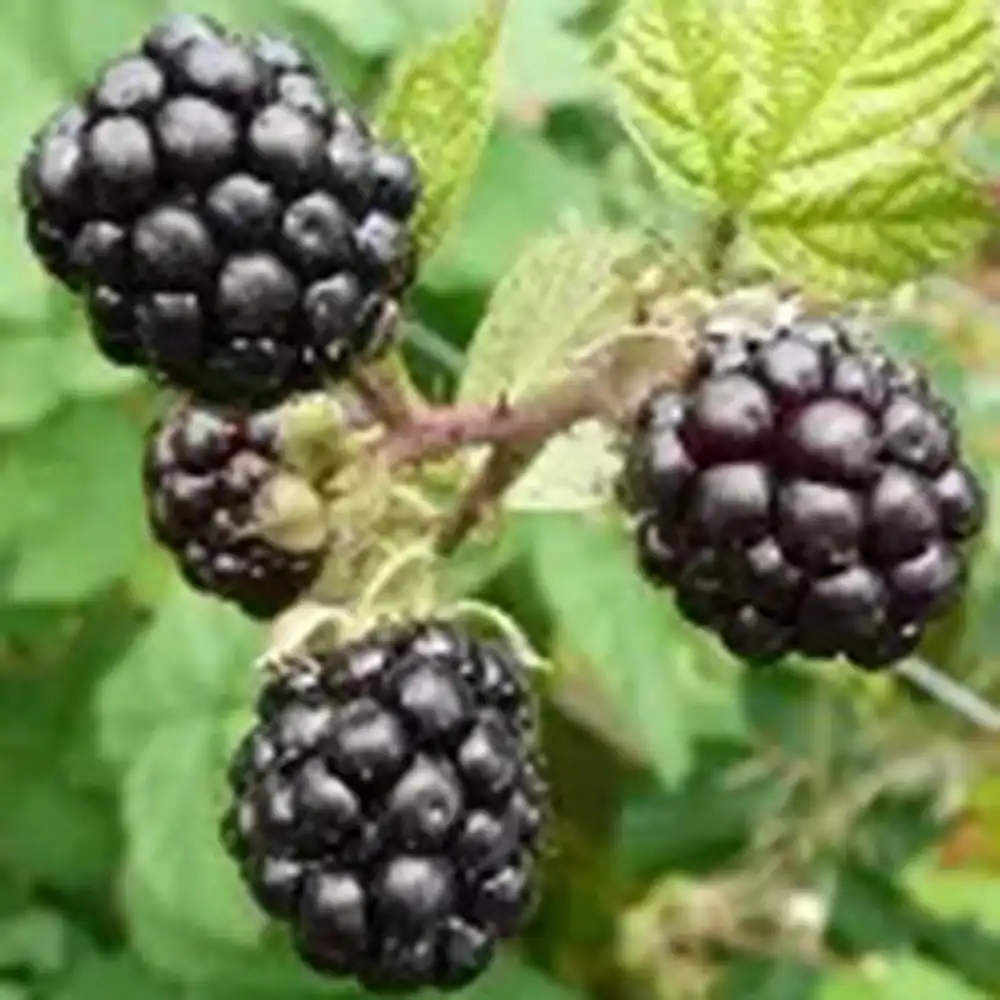
The blackberry is a delicious, nutrient-rich fruit that grows on a perennial shrub in the Rubus genus. Known for its deep purple-black color and sweet-tart flavor, the blackberry is enjoyed fresh, in baked goods, preserves, juices, and more. It is also packed with vitamins C and K, fiber, and antioxidants, making it both tasty and healthful. Blackberry plants are versatile and can be grown in backyards, small farms, or larger commercial operations.
Blackberries grow best in full sun, with at least six to eight hours of direct sunlight each day. They prefer well-drained, slightly acidic soils with a pH between 5.5 and 6.5. While they can grow in various soil types, they thrive in loamy, fertile soils. Planting is typically done in early spring, and it's important to give each plant enough space—usually about 3 to 5 feet apart—depending on the variety. There are two main types of blackberry plants: erect and trailing. Erect types grow upright and don’t require much support, while trailing types need trellises or other support systems.
Blackberries benefit from regular watering, especially during flowering and fruit development. Mulching around the base of the plants helps retain moisture, suppress weeds, and improve overall plant health. Pruning is another key part of blackberry care, as it helps manage growth and encourages productive fruiting. In the first year, blackberry plants produce long canes called primocanes, which do not bear fruit. These canes become floricanes in the second year and produce berries.
As with most crops, blackberries can face a few common pests. These include aphids, Japanese beetles, and spider mites. Proper care, such as removing dead canes, managing weeds, and maintaining good airflow between plants, can help prevent issues. Beneficial insects and good garden hygiene are also helpful tools in keeping blackberry plants healthy. Some growers also use netting to protect ripening fruit from birds.
Blackberry harvest usually begins in mid to late summer, depending on the variety and location. The berries are ready to pick when they are deep black, plump, and pull easily from the plant. With good care and favorable conditions, blackberry plants can continue to produce fruit for many years, making them a rewarding crop for home gardeners and commercial growers alike. Their beauty, productivity, and taste make blackberries a valuable and enjoyable addition to any growing space.